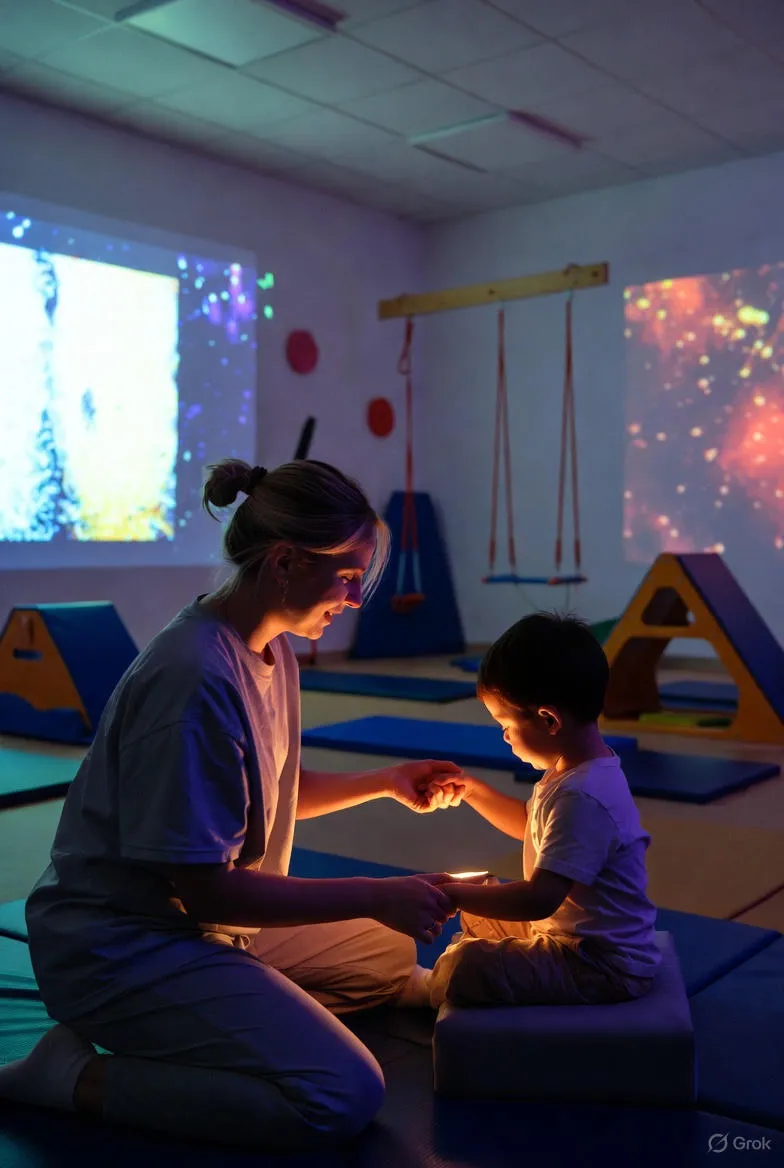
Sensory rooms have rapidly become essential tools within schools, hospitals, and therapeutic environments particularly for neurodivergent individuals, including those with Autism Spectrum Disorder (ASD). By offering structured sensory input, these rooms help students regulate emotional states, improve attention, and prepare for learning experiences. As digital therapy platforms emerge, these spaces are also becoming smarter, more adaptive, and more personalized than ever before.
This article builds upon foundational concepts outlined in our Best Practices for Sensory Rooms in Schools and explores how research-backed design and intelligent technology are shaping the next generation of sensory support spaces.
Why Sensory Regulation Matters for Neurodivergent Students
Sensory processing differences are among the most impactful daily challenges for autistic individuals. Bright lights, unpredictable sound, crowded visuals, or unexpected touch can trigger dysregulation almost instantly. For others, sensory input may feel muted, leading to disengagement and difficulty transitioning.
Sensory rooms offer controlled, predictable environments that help stabilize nervous system responses. Research consistently shows that when sensory needs are met, students demonstrate lower anxiety, fewer behavioral incidents, and higher engagement. In fact, schools integrating structured sensory environments have reported up to a 60% reduction in behavioral referrals (Nelson et al., 2022). When students return regulated, they are cognitively available for learning something traditional classrooms often cannot achieve alone.

Designing for Diverse Sensory Profiles
A well-designed sensory room is not merely a collection of equipment; it is an intentional system. Calming areas provide dim lighting, repetitive visuals, and deep-pressure seating to support students experiencing sensory overload. This type of controlled input has been shown to reduce fight-or-flight responses, lowering physiological stress markers (Anderson et al., 2017).
Conversely, stimulation zones support students who are under-responsive. Interactive projection walls, vibration panels, and rhythmic lighting increase alertness and improve body awareness. Observational studies show that autistic children naturally gravitate toward sensory equipment aligned with their sensory-seeking behaviors, suggesting these tools are self-selected regulation strategies (Unwin et al., 2023).
Movement-based tools such as swings and balance fixtures play a critical role in developing motor planning, proprioception, and vestibular processing. Over time, this leads to improvements in executive function, functional mobility, and spatial awareness.
Tactile exploration, through textured surfaces or interactive bubble tubes, further supports grounding and can reduce sensory defensiveness. Each component serves a neurological purpose.
Neurological Effects of Controlled Sensory Input
When sensory stressors overwhelm the nervous system, the amygdala becomes hyperactive. In this state, executive functions; planning, reasoning, communication shut down. Students may withdraw, engage in repetitive behaviors, or become emotionally reactive.
Sensory rooms help deactivate this alarm state. Controlled sensory experiences stimulate calming neural pathways, allowing the prefrontal cortex to function again. This shift enables students to process emotions, follow instructions, and interact socially.
These environments also support neuroplasticity. Repeated, structured exposure strengthens neural pathways responsible for sensory integration. Research demonstrates that when children can control sensory stimuli, repetitive behaviors, vocalizations, and overactivity decrease significantly (Shapiro et al., 2021).
Regulation is not just about comfort, it’s about building lifelong neurological resilience.

How Digital Therapy Tools Are Transforming Sensory Rooms
Traditional sensory rooms rely heavily on staff intervention: adjusting lights, switching tools, monitoring reactions. Digital therapy platforms now introduce:
-
Personalization — Rooms can adjust lighting intensity, sound patterns, and visual content based on user preferences or emotional state.
-
Real-time adaptation — If a student begins to escalate, the environment can automatically dim and simplify. If engagement drops, visuals can respond dynamically to movement.
-
Data-driven insights — Occupational therapists gain access to session duration, usage patterns, and interaction data that inform objective progress tracking.
-
Reduced staffing burden — Therapists can orchestrate complex sequences remotely, allowing them to focus on coaching, not equipment management.
These innovations do not replace traditional sensory tools - they enhance them, enabling richer, safer, more responsive experiences.
Measurable Outcomes in Educational Settings
Sensory rooms are not simply calming spaces; they produce measurable improvements across academic, behavioral, and developmental domains:
-
smoother transitions between activities
-
fewer classroom disruptions
-
improved motor planning and balance
-
increased communication attempts
-
enhanced emotional vocabulary
-
longer periods of academic focus
Classroom climate improves as well. When students can self-regulate, teachers spend more time teaching and less time managing escalations.
Evidence: How Sensory Rooms Support Neurodivergent Regulation
A growing body of research illustrates the value of sensory environments for individuals with ASD and sensory processing differences. When students have agency within these environments, outcomes improve dramatically.
Children show significantly fewer repetitive behaviors and reduced stress when they can control sensory inputs such as lighting or audio (Unwin et al., 2021). Controlled multi-sensory rooms lower anxiety and physiological arousal (Zheng et al., 2024), supporting emotional stability. This regulation allows attention to return, enabling longer engagement windows and improved participation.
Even short-term exposure can lead to gains in adaptive developmental skills, including motor coordination and sensory responsiveness. And when sensory strategies are implemented in classrooms, task engagement increases substantially, while disruptive behaviors decrease.
These findings demonstrate that sensory room interventions are not only therapeutic they are academically relevant.
Key Outcomes from Sensory Room Research
- Reduced repetitive behaviors & stress: Children show fewer repetitive behaviors when given control over sensory inputs.
- Improved emotional regulation: Controlled multisensory environments reduce physiological stress and anxiety markers.
- Enhanced attention & engagement: Higher attention levels are observed during self-directed sensory interaction.
- Academic & behavioral gains: Structured sensory schedules have increased task engagement by 32% and reduced incidents by 26% over eight weeks.
The Future of Sensory Room Design
In the coming years, sensory rooms will evolve beyond static equipment into responsive ecosystems. Artificial intelligence may adjust environments based on heart rate, movement patterns, or expressed emotion. Gamified therapy will support motivation and motor planning. Data may automatically integrate into IEPs or OT documentation.
Most importantly, these spaces will widen in scope supporting anxiety, ADHD, trauma-related sensory issues, and more.
As understanding grows, sensory rooms are shifting from specialized accommodations into foundational learning infrastructure.
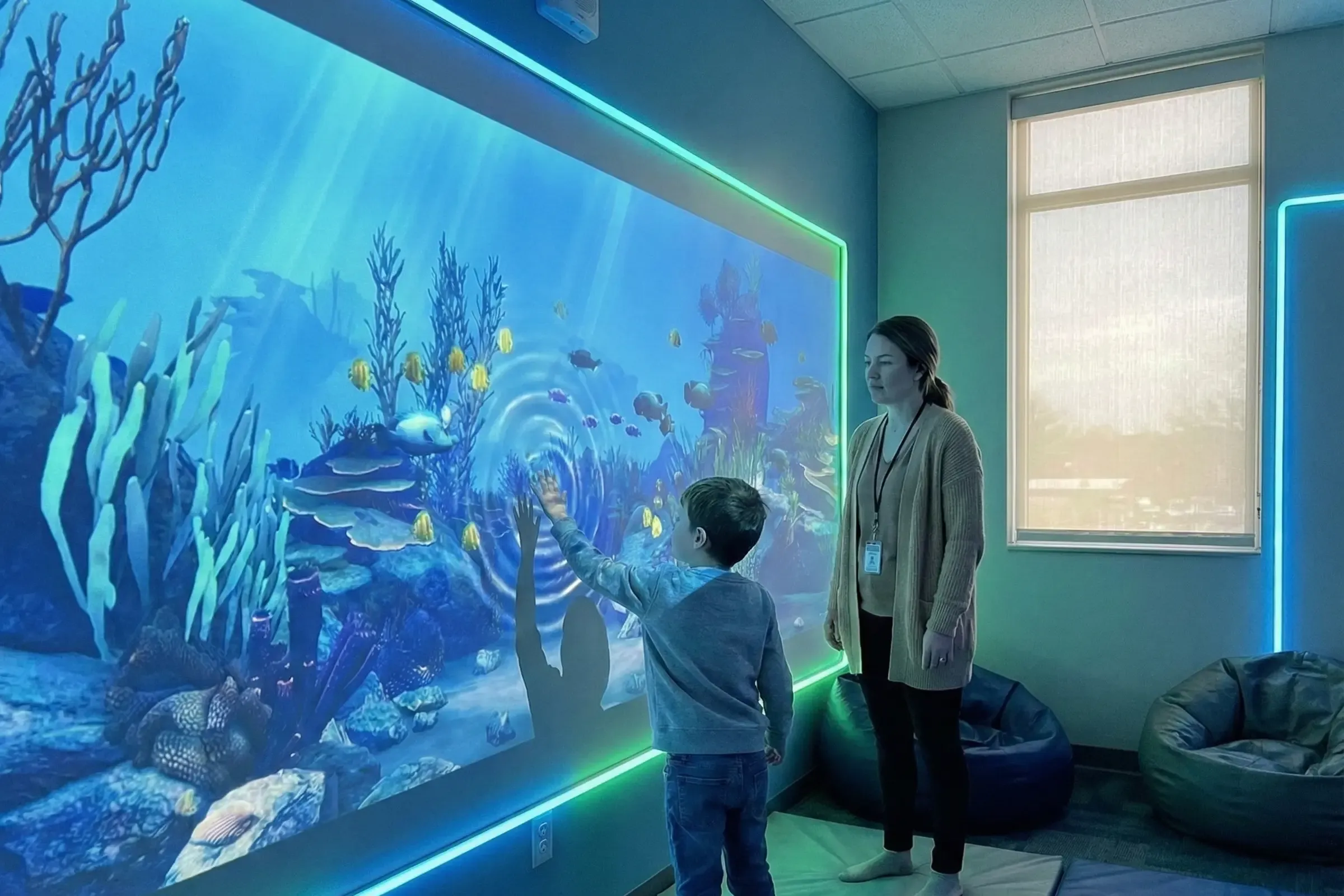
The future of sensory support lies in responsive ecosystems that adapt to the individual in real-time. Ouva Sensory Room Solutions lead this evolution by transforming static spaces into intelligent, AI-powered environments.

By utilizing touch-free Video Walls and interactive Stations, Ouva allows for a seamless blend of physical and digital therapy. These solutions are designed to automate environmental adjustments, allowing therapists to focus on coaching while the room itself handles the sensory “diet.” Whether in Hospitals & Clinics, Schools, or Therapy Clinics, this technology ensures that sensory regulation is personalized, data-driven, and highly effective.
