Guide
Emotional Regulation Tools for Autism and ADHD in 2026: An Evidence-Informed Guide
Emotional regulation tools work best when they make life easier before a person reaches overload. For autistic people, people with ADHD, and people with sensory processing differences, that often means reducing sensory load, making communication easier, giving the body predictable feedback, and designing spaces that do not demand constant self-control.
This guide reviews the major categories of regulation tools available in 2026, with a practical lens: what each tool is trying to solve, where the evidence is strongest, where the research is still early, and how families, schools, clinics, and hospitals can use technology without overclaiming what it can do.
Key Takeaways
- Emotional regulation is not about suppressing neurodivergent traits. It is about helping people feel safer, communicate needs, recover from stress, and participate more fully.
- The strongest supports are often the least flashy: communication tools, predictable routines, sensory-aware environments, and trained caregivers.
- Evidence varies widely. AAC and visual supports have a strong autism evidence base; heart-rate biofeedback and user-controlled multisensory environments have encouraging clinical evidence; many consumer wearables, AI companions, and neurofeedback devices remain promising but preliminary.
- In acute distress, passive or low-demand supports usually work better than apps that require planning, language, or sustained attention.
- For organizations, the best outcomes come from building an ecosystem: environment, communication, sensory choice, staff training, data privacy, and clear outcome tracking.
Why Regulation Can Be Harder for Autistic and ADHD Individuals
Autism and ADHD are highly diverse neurodevelopmental profiles. The CDC notes that autistic people may communicate, interact, learn, and move in ways that differ from most people, and that abilities and support needs vary significantly from person to person. ADHD can involve difficulty with attention, impulse control, and activity regulation, and it often co-occurs with anxiety, learning differences, sleep problems, or autism.
For many neurodivergent people, dysregulation is not a “behavior problem” first. It is often the visible result of stacked stressors: sound, light, hunger, pain, fatigue, transitions, social uncertainty, inaccessible communication, and the effort of masking.
Several mechanisms are especially relevant:
- Sensory differences. Autistic people may have unusual or intense reactions to sensations, including sound, touch, movement, lighting, smell, and internal body signals.
- Interoception and alexithymia. Some autistic people have difficulty noticing or interpreting internal signals such as heart rate, breathing, hunger, pain, or rising tension. Research also links interoceptive confusion and alexithymia with emotion-regulation challenges in autistic adults.
- Autonomic arousal. Research suggests that some ADHD and autistic populations show differences in autonomic regulation and heart-rate variability, though findings are mixed and should not be treated as a diagnostic marker.
- Communication friction. A person who cannot easily say “too loud,” “I need a break,” “my stomach hurts,” or “I do not understand the next step” may escalate because the environment is not giving them another way to be understood.
That is why the best regulation tools do not start with the question, “How do we stop the meltdown?” They start with, “What made this much effort necessary?”
Evidence Map: Which Tools Are Best Supported?
| Tool category | What it can support | Evidence status | Best use case |
|---|---|---|---|
| AAC and visual supports | Communication, predictability, choice, self-advocacy | Strong autism evidence base when taught systematically | Daily use across home, school, therapy, and community |
| User-controlled sensory environments | Sensory modulation, attention, engagement, transition support | Encouraging evidence; design and agency matter | Schools, therapy clinics, pediatric hospitals, sensory rooms |
| Heart-rate biofeedback games | Awareness of arousal and practice calming skills | Moderate and growing evidence; best with coaching and generalization | Children who enjoy games and can practice outside crisis moments |
| Acoustic supports | Reduced auditory load while preserving participation | Practical low-risk category; device-specific evidence varies | Classrooms, waiting rooms, transit, restaurants, events |
| Passive haptic or vibration wearables | Calming cues, stress recovery, sleep routines | Preliminary; some trials ongoing, many claims manufacturer-reported | Optional add-on for people who like rhythmic tactile input |
| Neurofeedback and consumer EEG | Attention or relaxation training | Mixed; not a stand-alone ADHD treatment based on blinded RCT/meta-analysis evidence | Clinician-supervised use, not a quick fix or diagnosis tool |
| Social robots and AI companions | Structured practice, social-emotional scripts, engagement | Promising but uneven; product availability and data privacy are major concerns | Carefully selected clinical, school, or home programs |
Communication Tools Are Regulation Tools
Communication is often the first regulation tool.
If a person can ask for a break, reject an input, request help, identify pain, choose an activity, or clarify what is happening next, the nervous system has less to fight. That is why augmentative and alternative communication (AAC), visual schedules, choice boards, and social narratives belong in any serious conversation about emotional regulation.
AAC includes aided systems such as speech-generating devices, picture systems, tablets, communication boards, and text-based tools, as well as unaided systems such as signs and gestures. The Autism Focused Intervention Resources & Modules project, based on the National Clearinghouse on Autism Evidence and Practice review, identifies AAC as an evidence-based practice for autistic learners across childhood and adolescence, with outcomes including communication, behavior, joint attention, play, motor, academic, and social skills.
Examples of communication and predictability tools include:
- AAC apps such as Proloquo2Go, TouchChat, Avaz, or other speech-generating systems selected with a speech-language pathologist;
- low-tech communication boards for “stop,” “break,” “help,” “pain,” “hungry,” “too loud,” “finished,” and “I need space”;
- visual schedules and first-then boards;
- visual timers and transition warnings;
- personalized social stories and scripts;
- emotion thermometers or body-signal maps.
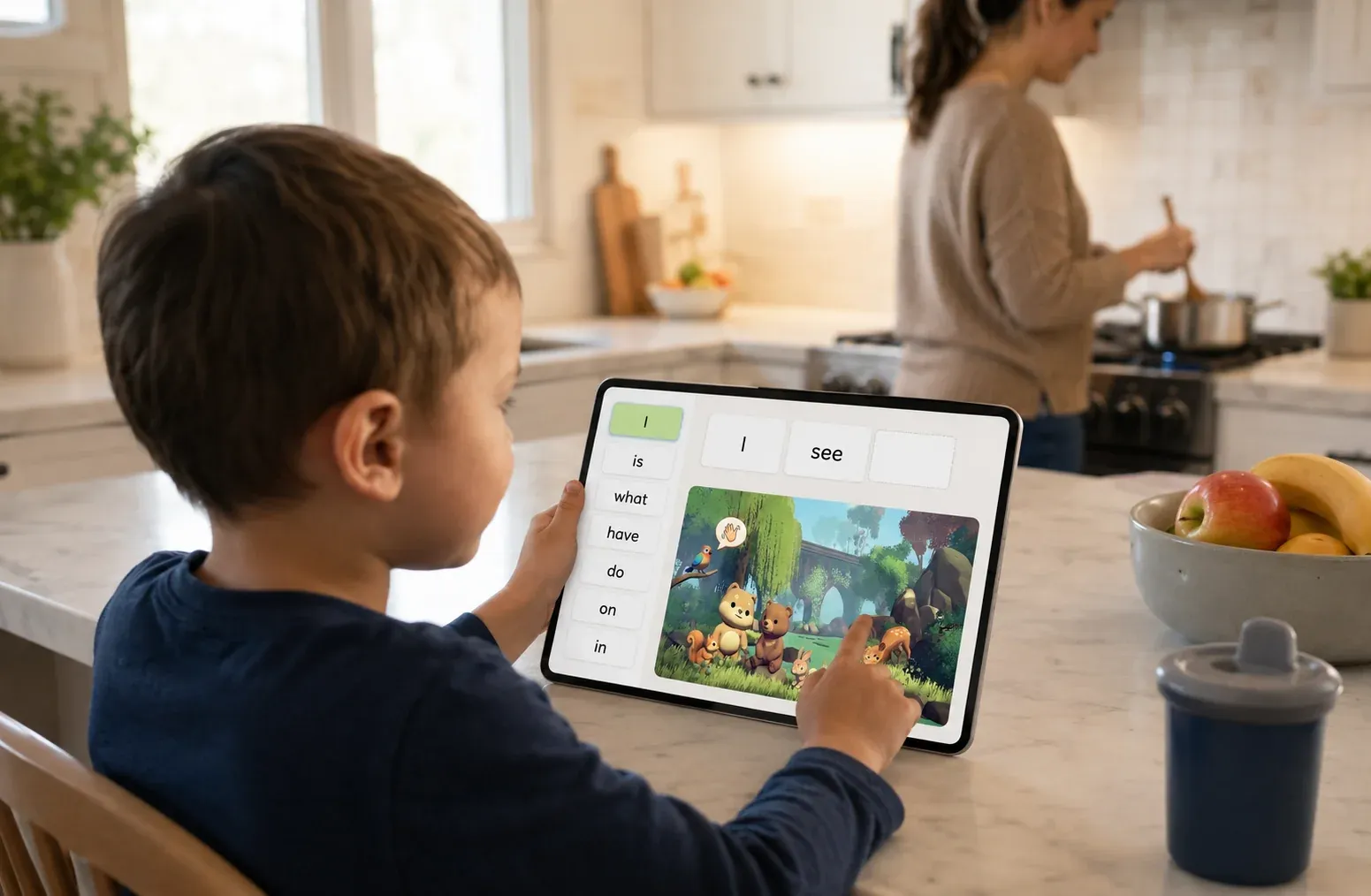
The key is implementation. AAC should not be treated as a special device pulled out only during crisis. It should be modeled all day, personalized to the person’s real life, and respected as valid communication. Taking away communication as a consequence is the opposite of regulation support.
Acoustic Supports: Reduce the Sharp Edges of Sound
Sound sensitivity can be exhausting. For some autistic people and people with sensory processing differences, background chatter, scraping chairs, alarms, ventilation noise, hand dryers, sirens, chewing, or overlapping voices can quickly consume all available coping capacity.
Acoustic tools fall into several groups:
- Noise-reducing headphones or ear defenders for strong protection in high-noise settings.
- Active noise-canceling headphones for steady low-frequency sound, such as engines or HVAC hum.
- Filtered earplugs that reduce certain frequencies while preserving more speech and environmental awareness.
- Environmental acoustic design, including soft surfaces, acoustic panels, quiet zones, and reduced reverberation.
Flare Audio’s Calmer is one example of a filtered ear device. Flare reports that Calmer reduces sound energy in the 2 kHz–8 kHz range, which the company describes as a middle-to-high frequency range associated with harshness. A small three-week pilot thesis with 12 adults with self-reported hyperacusis and level 1 autism found that 66% reported improved quality-of-life measures and 83% reported improved sound tolerance while wearing Calmer, while 33% reported quality of life stayed the same or worsened because of tactile sensitivity, fit, need for stronger decibel protection, or comfort.
Calmer is promising for some users, not universal, and not a substitute for audiology support when hyperacusis, tinnitus, pain, or hearing concerns are present.
Biofeedback: Make the Body’s Signals Visible
Biofeedback tools try to teach a skill: noticing and changing physiological arousal.
For many children, “calm down” is too abstract. A biofeedback game can turn arousal into something visible. When heart rate rises, the game changes. When the child breathes, pauses, or relaxes enough to bring heart rate down, the game rewards that shift.
The best-known consumer example is Mightier, which pairs a heart-rate monitor with games designed to help children practice emotional regulation. The strongest peer-reviewed evidence behind this category includes a double-blind randomized controlled trial of RAGE-Control, a game-based heart-rate biofeedback intervention used alongside anger control training. In that study, 40 youth with clinically significant anger dyscontrol were randomized to active or sham game conditions. The active condition showed larger improvements in aggression, oppositionality, and clinician-rated global severity than the sham game condition, and heart-rate control during gameplay was associated with improvements in aggression and oppositional behaviors.
That does not mean every child will benefit, or that biofeedback “treats autism” or “treats ADHD.” It means that repeated practice with immediate body-based feedback can help some young people build a bridge between body signals and coping skills.
Best practices:
- Introduce biofeedback when the person is calm, not during a crisis.
- Practice in short, positive sessions.
- Pair the tool with real-world strategies such as breathing, movement breaks, pressure input, communication cards, or leaving a noisy space.
- Track practical outcomes: fewer high-intensity escalations, faster recovery, better transition tolerance, or more independent help-seeking.
- Avoid using the data to blame the child. A high heart rate is information, not misbehavior.
Passive Wearables and Haptic Tools: Helpful Cues, Early Evidence
Passive wearables attempt to support regulation without requiring the user to plan, talk, or play a game. They may use vibration, rhythmic tactile input, sound, or guided breathing cues. This low-demand design can be appealing, especially for people who lose access to language or executive functioning during distress.
Apollo Neuro is one example. Apollo describes its device as a wearable that delivers vibration patterns intended to support autonomic balance. The company lists several studies, including adult and athlete populations, as well as an ADHD trial for children. The pediatric pilot often cited in marketing involved 15 patients ages 7–17 across diagnoses including anxiety, ADHD, impulse control challenges, autism, and mood disorders. It was observational, used clinician/parent/patient reports, and explicitly stated that it was not designed to make claims about treating symptoms of an underlying disorder. A separate registered ADHD study used a double-blind randomized placebo-controlled design, but trial listings indicate it excluded children with autism.
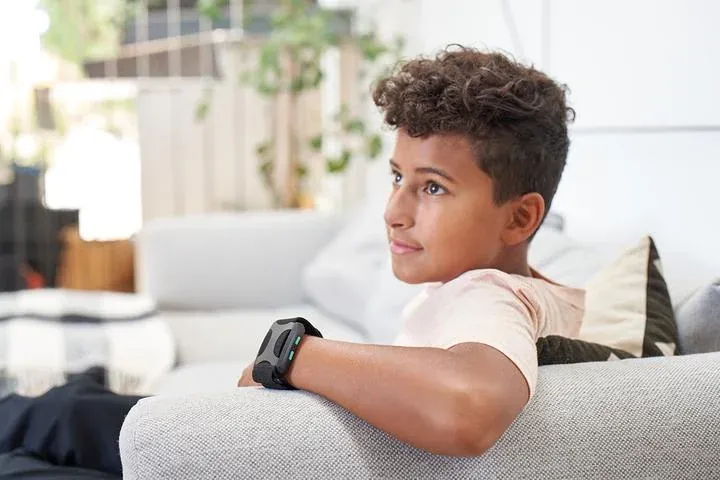
Sensate is another example of a consumer calming device. Its registered ClinicalTrials.gov study, NCT05519995, focuses on Sensate II use and perceived stress in adults. Separately, a registered study of non-invasive vagus nerve stimulation in autism and intellectual/developmental disability is NCT06259201, but that study describes a device FDA-approved for migraine and cluster headaches, not Sensate.
The takeaway: haptic and vibration tools may be worth trying for individuals who enjoy rhythmic tactile input, but the evidence should be described as preliminary unless a specific device, population, and outcome have been tested in a well-controlled study.
Neurofeedback and Consumer EEG: Be Careful With Promises
Consumer EEG headbands and neurofeedback platforms are often marketed for focus, calm, meditation, or attention training. Some people find them motivating. Some clinicians use neurofeedback protocols as part of a broader plan.
The evidence, however, is mixed. A large double-blind placebo-controlled randomized trial of theta/beta ratio neurofeedback for ADHD did not support a specific effect at treatment end or 13-month follow-up. A 2025 systematic review and meta-analysis in JAMA Psychiatry reported that randomized trials using probably blinded outcomes or neuropsychological outcomes did not support neurofeedback as a stand-alone ADHD treatment, though some small effects appeared in narrower analyses.
That does not mean all neurofeedback is useless. But be cautious of products advertised as “clinically proven to treat ADHD” unless the claim is tied to a specific protocol, study design, and population. For consumer devices, the more realistic expectation is that they may support awareness, relaxation practice, or clinician-guided training for some users.
Use extra caution when a product claims to diagnose attention, read emotions, detect meltdowns, or replace a licensed clinician.
Sleep and Breathing Supports
Sleep disruption can lower the threshold for dysregulation the next day. A person who is tired has less capacity to handle sound, transitions, frustration, and social demands.
Breathing-based tools, including guided breathing apps, paced breathing visuals, weighted items, and breathing robots, aim to reduce nighttime arousal. Somnox is a huggable breathing robot designed to guide slower breathing through tactile entrainment. Research on Somnox is still limited and mixed. A small single-case study explored acceptability and safety in adults with insomnia, while a randomized controlled trial in adults with insomnia did not show strong group-level effects on insomnia symptoms, although individual responses varied.
For neurodivergent users, the practical question is fit. Some people love rhythmic pressure and breathing cues. Others dislike the tactile sensation, sound, size, or cost. Sleep tools should be evaluated as part of a broader sleep plan: light exposure, routines, anxiety, pain, medication effects, sensory comfort, screen timing, and medical sleep concerns.
Social Robots and AI Companions: Promising, but Product Continuity Matters
Social robots can create a predictable, repeatable interaction space. For some autistic children, that predictability may make it easier to practice turn-taking, emotion labeling, imitation, or social scripts. A systematic review and meta-analysis of robot-mediated interventions for autistic children and young people found positive effects on social functioning in randomized controlled trials, while also noting the need for careful study design and implementation.
A Yale-led study also reported improvements in social skills after robot-guided activities for autistic children.
However, this category also shows why product continuity matters. Moxie, once a prominent AI companion robot, is no longer available for sale according to its current support page; that page also states that Embodied, Inc. shut down and that Moxie Robots, Inc. acquired the rights to support existing owners.
When evaluating AI companions or robots, ask:
- Is the product actively sold and supported?
- What happens if the company shuts down?
- Does the system require cloud access?
- Where is child data stored?
- Can parents or clinicians review, export, or delete data?
- Is the child likely to become emotionally dependent on a product with uncertain continuity?
- Does the tool support human relationships, or replace them?
AI-Powered Sensory Environments: The Biggest Shift of All
Wearables, apps, and companion robots each support one person, one device, one interaction at a time. The space itself is different. A room shapes every person who enters it — which is why the biggest shift in regulation technology is not a gadget you put on a child, but the environment you build around them. Before asking someone to “use a coping skill,” look at the room.
A classroom with fluorescent lighting, scraping chairs, unpredictable bells, and crowded transitions may require constant regulation. A hospital waiting area with bright screens, alarms, unfamiliar smells, and no clear sense of timing can quickly become overwhelming. A therapy space may be clinically excellent but still hard to tolerate if the sensory profile is wrong.
Environmental supports include:
- adjustable lighting and reduced glare;
- quieter zones or acoustic treatment;
- visual schedules and transition cues;
- access to movement, deep pressure, or quiet retreat;
- predictable routines;
- sensory tools that are available without shame or punishment;
- low-demand spaces where a person can recover without being interrogated.

Multisensory rooms and the importance of control
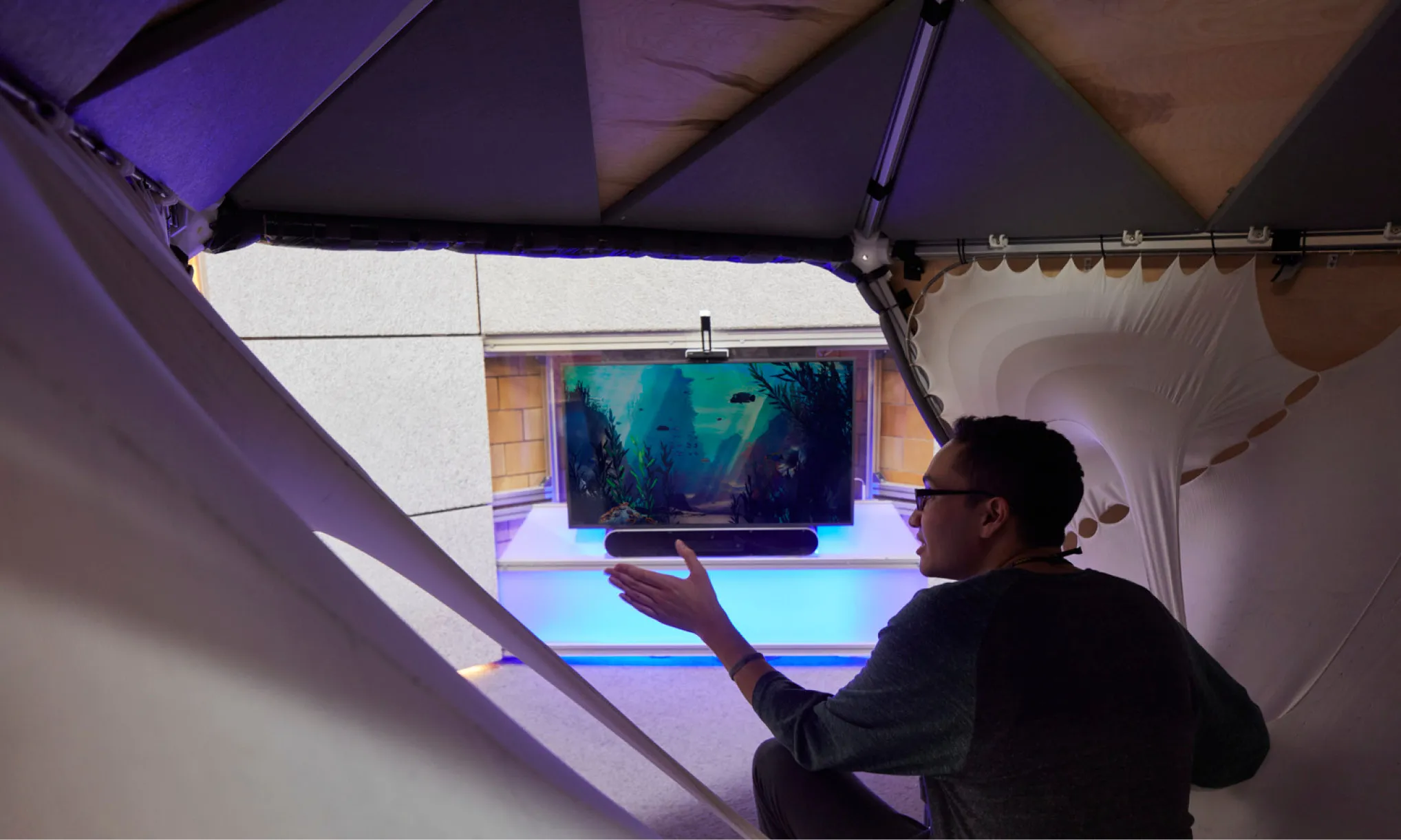
Multisensory environments, sometimes called sensory rooms or Snoezelen-style rooms, are common in schools and care settings. The important design question is not just what equipment is in the room; it is who controls the experience.
A study of multisensory environments with autistic children found that when children had control over sensory changes, they showed more attention and fewer repetitive motor behaviors, sensory behaviors, stereotyped speech, vocalizations, and high activity levels. The authors emphasized that how an environment is used can affect behavior and learning conditions.
That finding has a practical implication: a sensory room should not be a passive closet of equipment. It should be a predictable, choice-based environment where the user can shape intensity, pacing, and content. For practical layouts, see our guides to designing effective sensory rooms and the sensory room for autism overview.
Interactive sensory walls and touch-free environments
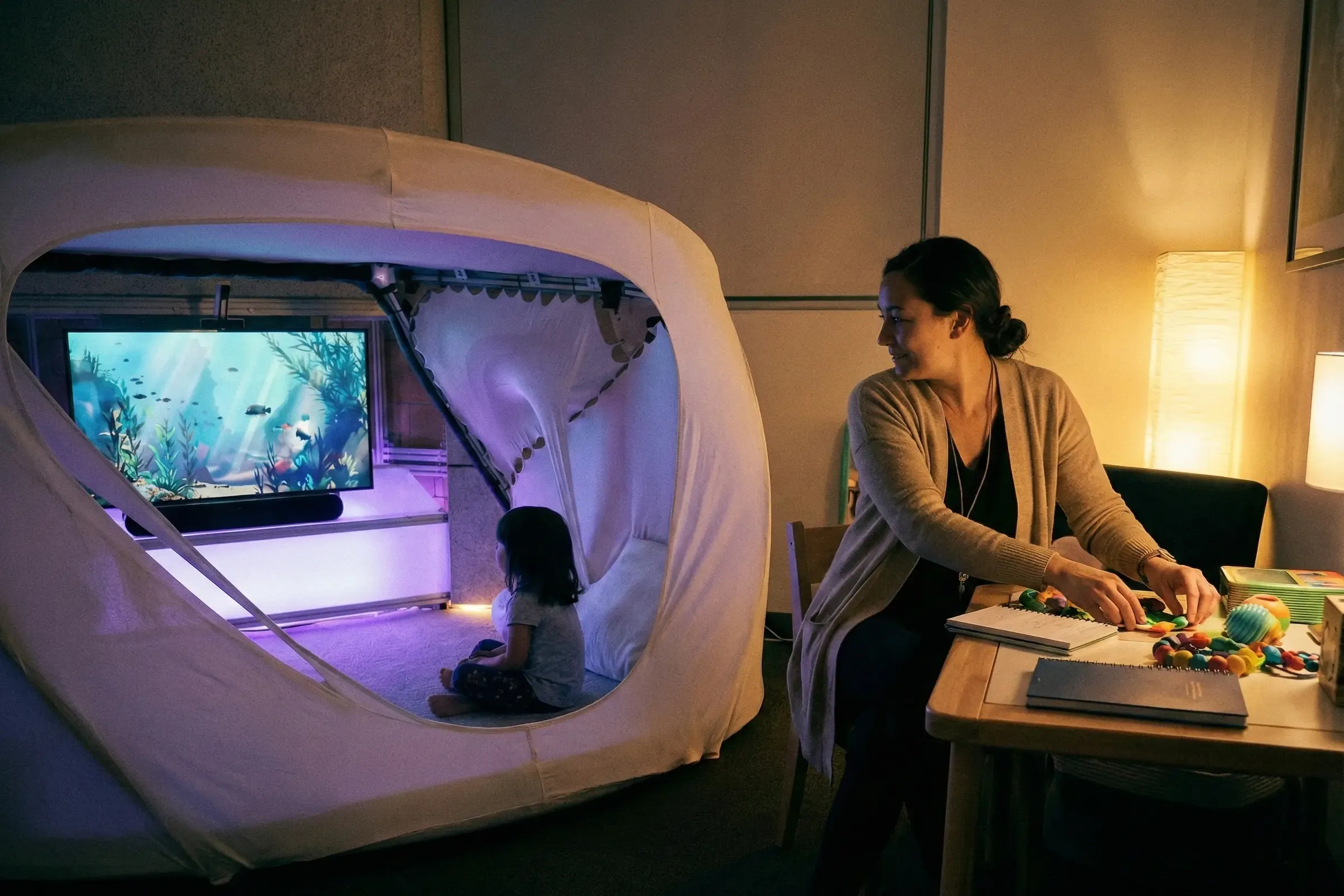
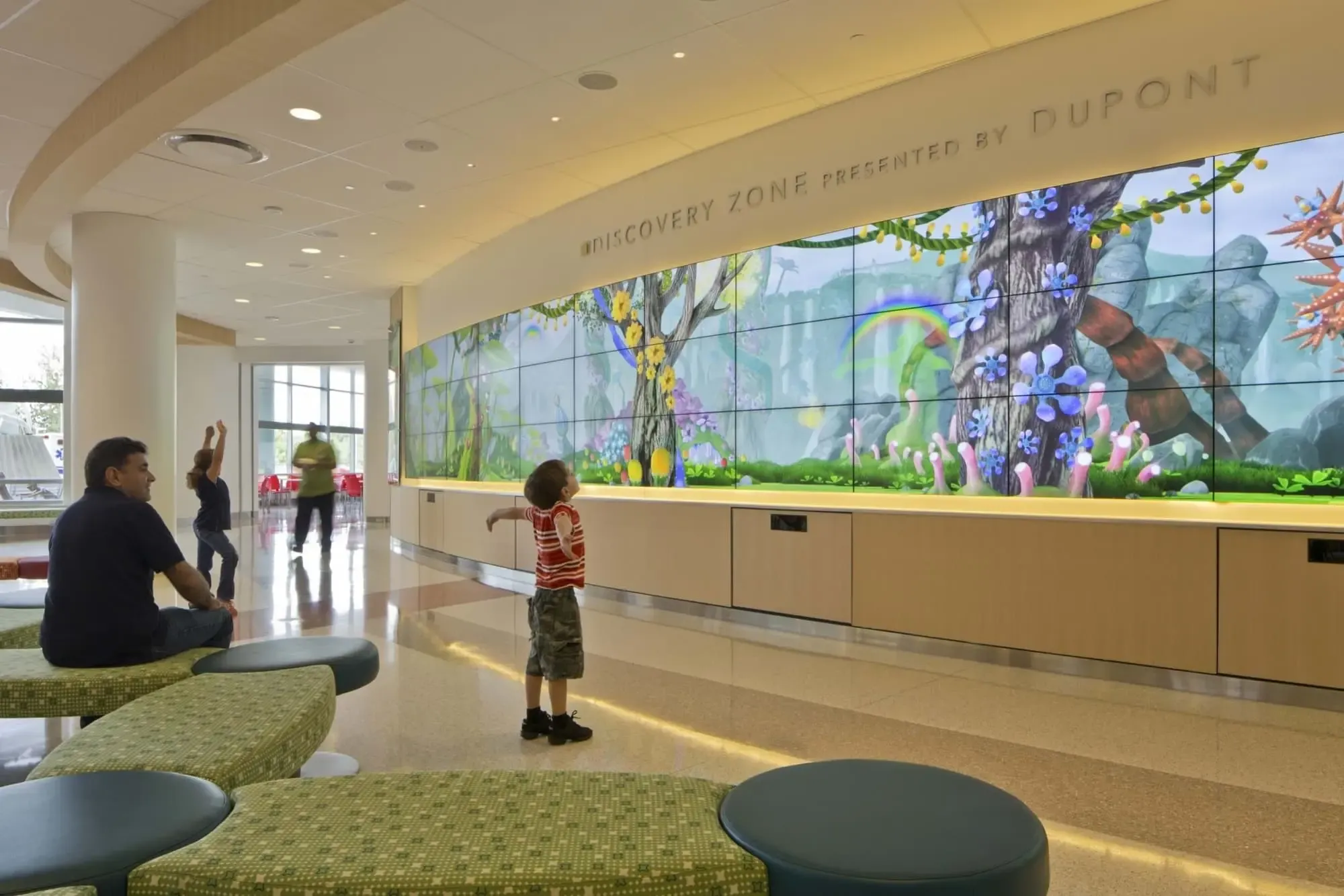
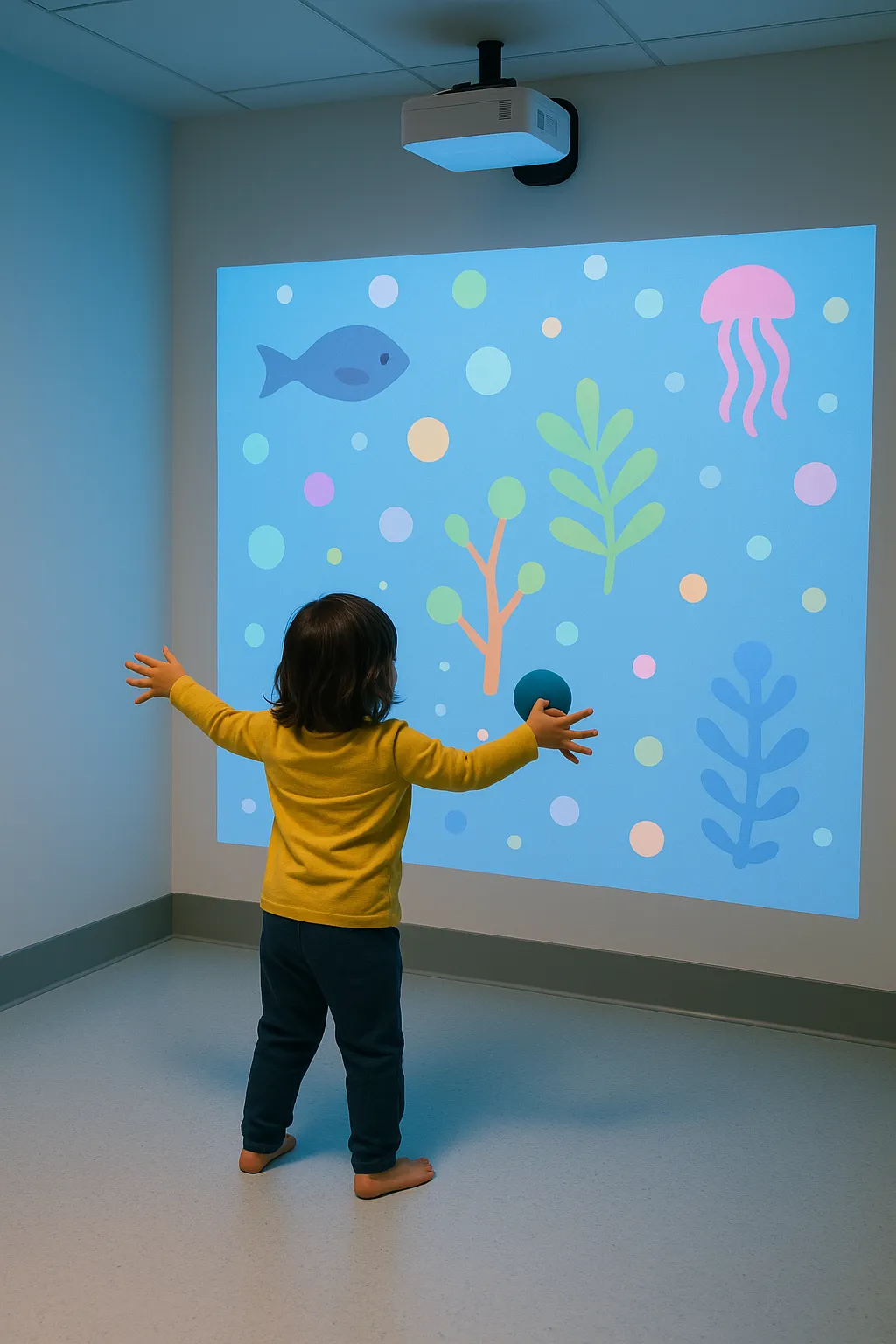
Interactive sensory walls take this furthest. They extend the idea of a controllable environment from a small room to an architectural scale, and computer vision lets the space respond to a person’s movement in real time. In pediatric healthcare, therapy clinics, and schools, large interactive displays can provide full-body movement, predictable visual feedback, and calming or energizing sensory content without requiring the child to touch shared surfaces.
For example, Ouva’s AI-powered interactive wall at Piedmont’s Bill & Olivia Amos Children’s Hospital uses a 17-foot video wall with immersive environments designed for patient engagement and comfort. At Lucile Packard Children’s Hospital Stanford, Ouva’s “Coastal Life” experience in the Story Corner uses movement-responsive visuals inspired by California coastal ecosystems; Stanford Children’s Health described the wall as an immersive sensory environment intended to entertain, relax, and reduce stress for children and families.

For organizations, the clinical promise of these systems is not “AI magically regulates emotions.” The promise is more practical: a well-designed environment can reduce waiting-room stress, support gross-motor movement, create predictable cause-and-effect interaction, and offer a safer alternative to shared tactile sensory boards in infection-sensitive settings. To make that promise meaningful, facilities should define outcomes in advance: engagement time, transition success, observed distress, caregiver feedback, staff workflow, cleaning burden, and accessibility. For a closer look at how these systems are used in autism therapy, read Interactive Sensory Walls for Autism (ASD) & Therapy and the interactive sensory wall overview.
How to Choose the Right Regulation Tool
Use this checklist before buying or implementing a tool.
What problem are we actually solving?
A child who melts down during lunch may need noise reduction, a visual lunch routine, help communicating food aversions, or a quieter table. A wearable will not solve a cafeteria that is too loud.
Does the tool reduce demand or add demand?
During overload, a tool that requires reading, talking, remembering steps, logging into an app, or following complex instructions may fail. Low-demand supports should be available first.
Does the person like the sensory input?
A “calming” vibration, weighted object, ear insert, or breathing robot is only calming if the user’s nervous system experiences it that way.
Is the claim matched to the evidence?
Look for the exact study design, population, sample size, outcome, and comparison group. A manufacturer survey is not the same as a blinded randomized trial.
Can the skill generalize?
A game is useful if the child can eventually use the same body awareness at school, in the car, at the dentist, or during transitions.
What data is collected?
For apps, wearables, robots, and AI systems, review privacy, consent, storage, retention, and access. In schools and clinics, align with FERPA, HIPAA, local privacy law, and organizational policy.
What outcome will we track?
Choose simple metrics: transition success, recovery time, number of requests for breaks, time spent engaged, distress ratings, sleep latency, caregiver stress, or staff observations.
Recommended Starter Stacks by Setting
Home
Start with communication access, predictable routines, a sensory menu, quiet recovery space, and sleep support. Add biofeedback or wearables only after the basics are in place.
School
Prioritize transition design, visual schedules, acoustic changes, movement access, AAC availability, and staff training. A sensory room should be choice-based, not a reward or removal space.
Therapy clinic
Combine clinician-led goals with sensory-aware design. Track whether tools improve participation, communication, tolerance of transitions, and recovery after challenging tasks. See how interactive sensory experiences fit clinical workflows in our ASD therapy clinic solutions.

Hospital or pediatric care environment
Reduce waiting-room uncertainty and sensory stress. Touch-free interactive sensory environments can support distraction, movement, engagement, and infection-sensitive access when designed with child life, occupational therapy, facilities, and patient experience teams.
Conclusion: The Future Is an Ecosystem, Not a Gadget
The most effective emotional regulation strategy is rarely a single product. It is a thoughtful system:
- a body that is not constantly overloaded;
- a person who can communicate needs;
- caregivers who understand sensory and emotional cues;
- spaces designed for predictability and agency;
- technology that supports participation without making exaggerated promises;
- outcomes that are measured in real life, not just in marketing copy.
For neurodivergent individuals, emotional regulation support should feel like dignity: more control, more comfort, more communication, and more room to be fully themselves.
Related Reading
Top Autism & ABA Therapy Apps and Digital Tools in 2026
Discover autism and ABA therapy apps, software solutions, AAC tools, caregiver trackers, and interactive sensory environments in 2026.
Interactive Sensory Walls for Autism (ASD) & Therapy
Discover how AI-powered interactive sensory walls are transforming autism therapy by providing personalized, engaging, and adaptive sensory experiences.

Complete Guide to Autism Support: Strategies & Tech 2025
This guide explores the innovative technologies and evidence-based strategies that are revolutionizing autism support in 2025.
Frequently Asked Questions
What are emotional regulation tools for autistic and ADHD individuals?
They are supports that help a person feel safer, communicate needs, manage sensory load, and recover from stress — ideally before reaching overload. They range from communication tools such as AAC and visual schedules to sensory-aware environments, acoustic supports, biofeedback games, wearables, and interactive sensory walls. The strongest supports are often the least flashy: predictable routines, accessible communication, and trained caregivers.
Do sensory rooms and interactive sensory walls actually help with emotional regulation?
They can, but design and control matter more than equipment. Research on multisensory environments found that autistic children showed more attention and fewer repetitive behaviors when they could control the sensory changes themselves. A sensory room or interactive wall should be a predictable, choice-based space — not a passive closet of equipment, and not a place used for reward or removal. Facilities should define and measure outcomes such as engagement, distress, transition success, and caregiver feedback.
Are heart-rate biofeedback games an evidence-based way to teach calming skills?
There is moderate and growing evidence for game-based heart-rate biofeedback. A double-blind randomized controlled trial of RAGE-Control found larger improvements in aggression and oppositionality than a sham game. Biofeedback works best when it is introduced while the person is calm, practiced in short positive sessions, and paired with real-world strategies. It does not "treat" autism or ADHD, and not every child will benefit.
Is neurofeedback an effective stand-alone treatment for ADHD?
The current evidence does not support that framing. A large double-blind placebo-controlled trial found no specific effect at treatment end or at 13-month follow-up, and a 2025 JAMA Psychiatry systematic review and meta-analysis found that trials using blinded or neuropsychological outcomes did not support neurofeedback as a stand-alone ADHD treatment. Some clinicians use it within a broader plan, but be cautious of products claiming it is "clinically proven to treat ADHD."
What should families and organizations check before buying a regulation tool?
Start with the problem you are actually solving, and prefer low-demand supports first. Ask whether the tool reduces or adds demand during overload, whether the person genuinely likes the sensory input, and whether the marketing claim matches the study design, population, and sample size. Confirm what data is collected and how it is protected, and choose simple outcomes to track such as recovery time, transition success, or the number of break requests.
How can hospitals and clinics use interactive sensory walls for neurodivergent patients?
Touch-free interactive sensory environments can reduce waiting-room uncertainty, support gross-motor movement, and create predictable cause-and-effect interaction without shared tactile surfaces in infection-sensitive settings. The honest promise is not that "AI regulates emotions" — it is a well-designed, movement-based environment. Implementations should be planned with child life, occupational therapy, facilities, and patient-experience teams, and evaluated against defined outcomes.