
Introduction to the Converging Paradigms of Patient Engagement
The delivery of healthcare and the dissemination of medical information are currently undergoing a structural transformation characterized by the rapid integration of artificial intelligence (AI), ambient computing, and interactive learning platforms. In the period spanning 2025 and 2026, the traditional models of patient education — which historically relied upon passive, one-directional communication such as printed brochures, static web pages, and brief clinical consultations — have been fundamentally disrupted. The modern digital health ecosystem now demands a continuum of care that is highly interactive, deeply personalized, and emotionally intelligent, a paradigm shift central to transforming patient education in hospitals. This journey begins at the moment of hospital admission and extends seamlessly through the physical hospital environment and into post-discharge recovery.
Once a patient enters the healthcare ecosystem, the educational experience must transcend basic clinical instruction. Interactive learning platforms, virtual health assistants, and ambient intelligence (AmI) systems are now deployed to provide continuous cognitive behavioral support, reduce pre-surgical anxiety, and foster a collaborative environment that dramatically improves clinical outcomes. Empirical evidence indicates that active patient engagement directly correlates with reduced hospital lengths of stay, lower readmission rates, and superior adherence to treatment protocols. By utilizing advanced technologies ranging from emotion-aware conversational agents to ambient sensors that monitor physical safety, health systems can deliver a highly curated educational experience. This report provides an exhaustive, multi-disciplinary analysis of the mechanisms, strategies, and technological architectures required to successfully implement AI-powered patient education and emotional support systems within hospitals and clinics.

Part 1: Architecture of Interactive and AI-Powered Patient Education Systems
The historical limitations of traditional patient education — such as low health literacy, diverse language barriers, and passive knowledge retention — are effectively dismantled by the integration of AI-powered interactive tools. The nature of patient education has shifted from static information retrieval to dynamic, multi-modal, and interactive learning.
Conversational AI and Virtual Health Assistants
The cornerstone of the modern patient education experience is conversational AI. Virtual Health Assistants (VHAs) and specialized medical chatbots provide real-time, highly personalized answers to complex clinical questions. For example, a patient recently diagnosed with hypertension can engage in an interactive dialogue, asking specific questions regarding dietary restrictions, the physiological mechanisms of their condition, and appropriate exercise regimens. The AI models dynamically adjust their vocabulary and syntactic complexity based on the patient’s demonstrated comprehension level, drawing exclusively from a centralized, medically vetted knowledge base to ensure accuracy. Adaptive learning platforms leverage big data and machine learning to continuously assess a patient’s knowledge, dynamically adjusting the content’s difficulty to help them master complex medical concepts.
These conversational agents have demonstrated significant clinical utility. Beyond pure education, VHAs actively assist in chronic care management by monitoring self-reported vital signs, sending automated medication reminders, and handling comprehensive pre-consultation questionnaires. This not only empowers the patient but also streamlines clinical workflows. A prime example of this evolution is the Ouva Virtual Assistant, an AI-powered avatar that extends patient interaction to the physical hospital room. By allowing patients to directly request assistance and routing clinical needs efficiently, these assistants automate patient wayfinding and admission processes, lowering the cognitive burden on team members and elevating the patient experience. For instance, Medical City Heart Hospital successfully deployed the Ouva Voice Assistant to provide voice-activated wayfinding from LED displays, eliminating unnecessary physical contact between healthcare workers and visitors while improving patient communication. Furthermore, the AvaSure Virtual Care Assistant, known as “Vicky,” utilizes ambient intelligence to triage in-room patient requests, instantly distinguishing between urgent clinical needs such as chest pain and operational requests, efficiently routing them to the appropriate personnel. Effectively deploying these virtual assistants is essential for reversing the loss of joy and fulfillment that leads to caregiver burnout.
Dynamic Visual Aids and Personalized Learning Paths
Generative AI facilitates the instantaneous creation of highly personalized visual learning aids tailored to the individual patient. Depending on the specific diagnosis, demographic profile, and learning preferences of the user, the system can autonomously generate customized infographics that simplify complex biochemical processes, interactive charts that visualize weight loss or blood pressure trends over time, and detailed animated videos explaining surgical procedures and corresponding recovery protocols.
By analyzing individual patient data, AI algorithms deeply personalize these educational paths, enhancing the relevance and overall effectiveness of the medical material. A post-operative orthopedic patient might receive daily bite-sized video modules explaining scar care, mobility exercises, and pain management strategies, ensuring that the patient receives the right information at the precise moment it is clinically relevant. Furthermore, these systems inherently support real-time multilingual translation and accessibility formatting, instantly breaking down linguistic barriers and addressing challenges related to visual impairment or low literacy.
Gamification and Enhanced Recovery Protocols
The integration of gamification into patient education platforms leverages proven psychological reward mechanisms to drive sustained engagement and treatment adherence. By introducing interactive elements such as daily progress trackers, digital badges for completing educational milestones, and interactive quizzes designed to reinforce clinical comprehension, patients become active, motivated participants in their recovery.
This interactive engagement is particularly vital in structured clinical pathways such as Enhanced Recovery After Surgery (ERAS) protocols. Extensive research demonstrates a direct correlation between active pre-operative patient engagement and a measurable reduction in post-operative complications. Digital health platforms that automate the delivery of ERAS patient education, collect continuous Patient-Reported Outcomes (PROs), and remotely monitor patients post-discharge have proven highly successful in reducing hospital lengths of stay, emergency department visits, and overall readmissions.
Part 2: Emotion-Aware Artificial Intelligence and Psychological Support Ecosystems
A strictly clinical approach to patient education frequently overlooks the profound psychological and emotional burdens associated with severe medical diagnoses and chronic illness management. Illness induces significant cognitive load, severe anxiety, and emotional exhaustion, which collectively act as massive barriers, severely impeding a patient’s ability to process, retain, and act upon complex medical information. Consequently, the next critical frontier in AI-driven patient engagement is the deployment of emotion-aware conversational AI and ambient support systems capable of recognizing, evaluating, and responding therapeutically to the patient’s psychological state.

Affective Computing and Multimodal Emotion Recognition
Modern emotion-aware AI systems transcend simple natural language text analysis. By utilizing advanced multimodal data fusion, these systems analyze a wide spectrum of behavioral and physiological inputs. Affective computing algorithms evaluate acoustic parameters in patient speech, detect micro-expressions in facial movements via device cameras, and monitor subtle changes in physiological biomarkers collected through integrated wearables. When a patient interacts with an educational module or a virtual health assistant, the system continuously monitors these data streams for subtle indicators of confusion, frustration, depressive affect, or severe anxiety.
If heightened emotional distress is detected, the AI dynamically alters its response strategy. It may slow down the delivery of complex clinical information, switch to a more empathetic, comforting tonal register, or pause the educational instruction entirely to provide immediate emotional support and grounding exercises. This capability injects a critical layer of artificial empathy that builds patient trust, reduces psychological resistance, and encourages much deeper, sustained engagement with the educational material. For instance, specialized interventions such as those detailed in The Complete Guide to Autism Support demonstrate how recognizing non-verbal cues like finger movements can indicate a child’s emotional state or sensory needs, helping parents and providers deliver appropriate educational support.
Neuro-Symbolic AI in Cognitive Behavioral Therapy
The most advanced iterations of emotional support AI utilize sophisticated neuro-symbolic architectures. Traditional deep learning models operate as opaque “black boxes,” relying purely on probabilistic pattern recognition. Neuro-symbolic AI solves this inherent limitation by integrating data-driven deep learning algorithms with structured, human-interpretable knowledge graphs and symbolic reasoning engines.
This hybrid architectural approach allows the AI to apply established clinical frameworks, such as Cognitive Behavioral Therapy (CBT), in real-time. When engaging a patient experiencing severe treatment fatigue, a neuro-symbolic system can logically navigate through structured psychoeducation, goal-setting methodologies, and motivational interviewing techniques. This ensures that the emotional support provided is therapeutically sound, highly adaptive to the individual’s cognitive profile, and completely explainable to the human clinicians overseeing the patient’s care.
Adapting Educational Frameworks for Emotional Resilience
The efficacy of interactive learning and emotional support can be further optimized by adapting established pedagogical models to the healthcare environment. For instance, the Community of Inquiry (CoI) framework posits that educational experiences are best supported through the collaborative intersection of cognitive presence, social presence, and teaching presence. In a digital healthcare context, “teaching presence” translates to the AI’s ability to seamlessly orchestrate the patient’s learning process — providing timely reminders, breaking tasks into manageable steps, and offering immediate feedback. “Social presence” is cultivated through virtual patient communities and interactive avatars that simulate human connection, providing the mutual awareness and validation necessary to mitigate the profound isolation often accompanying chronic illness.
Part 3: Ambient Intelligence (AmI) and the Evolution of the Intelligent Hospital Room
The physical hospital room represents a unique challenge for continuous patient interaction. The solution lies in Ambient Intelligence (AmI), the deployment of unobtrusive, highly integrated sensor networks and AI algorithms that seamlessly monitor, analyze, and interact with the physical environment without requiring explicit, manual input from the patient or the clinician.
The Architecture of Ambient Environments
Ambient intelligence systems rely on a complex matrix of computer vision cameras, depth sensors, and ambient listening devices discreetly embedded within the hospital infrastructure. These systems operate under a paradigm of ubiquitous computing, where the technology is effectively invisible but constantly analyzing spatial data, biomechanics, and auditory signals.
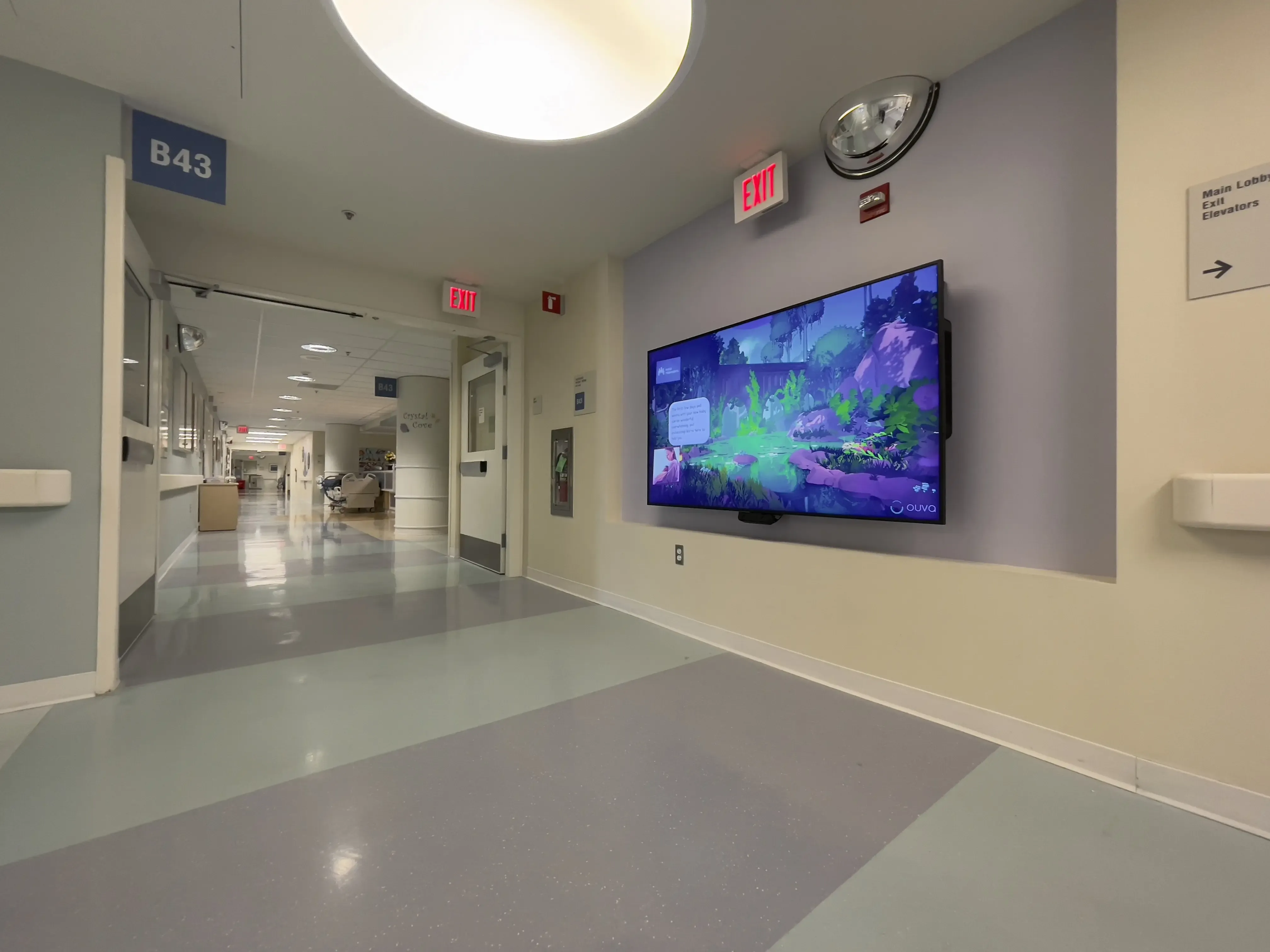
The primary objective of AmI in healthcare is to continuously monitor the quality of care, optimize clinical workflows, enforce safety protocols, and simultaneously augment the patient education experience without introducing alert fatigue. In the context of an “Intelligent Hospital Room,” ambient computer vision can detect subtle shifts in a patient’s biomechanics. If a high-risk patient attempts to exit the bed unassisted, the system anticipates the potential fall risk and immediately alerts bedside nurses via mobile devices or command centers, allowing for rapid intervention. Systems like Ouva Care Automation provide a unified platform for remote and floor teams to access critical data from the patient population in real-time, actively guiding nurse attention to patients that require immediate assistance.
Integrating AmI with Patient Education and Interactive Displays
Ambient intelligence creates profound new modalities for patient education by leveraging the patient’s physical state, positioning, and attention within the room. As patients recover in bed, interactive smart displays, such as intelligent mirrors or wall-mounted screens, can provide contextual, highly relevant education.
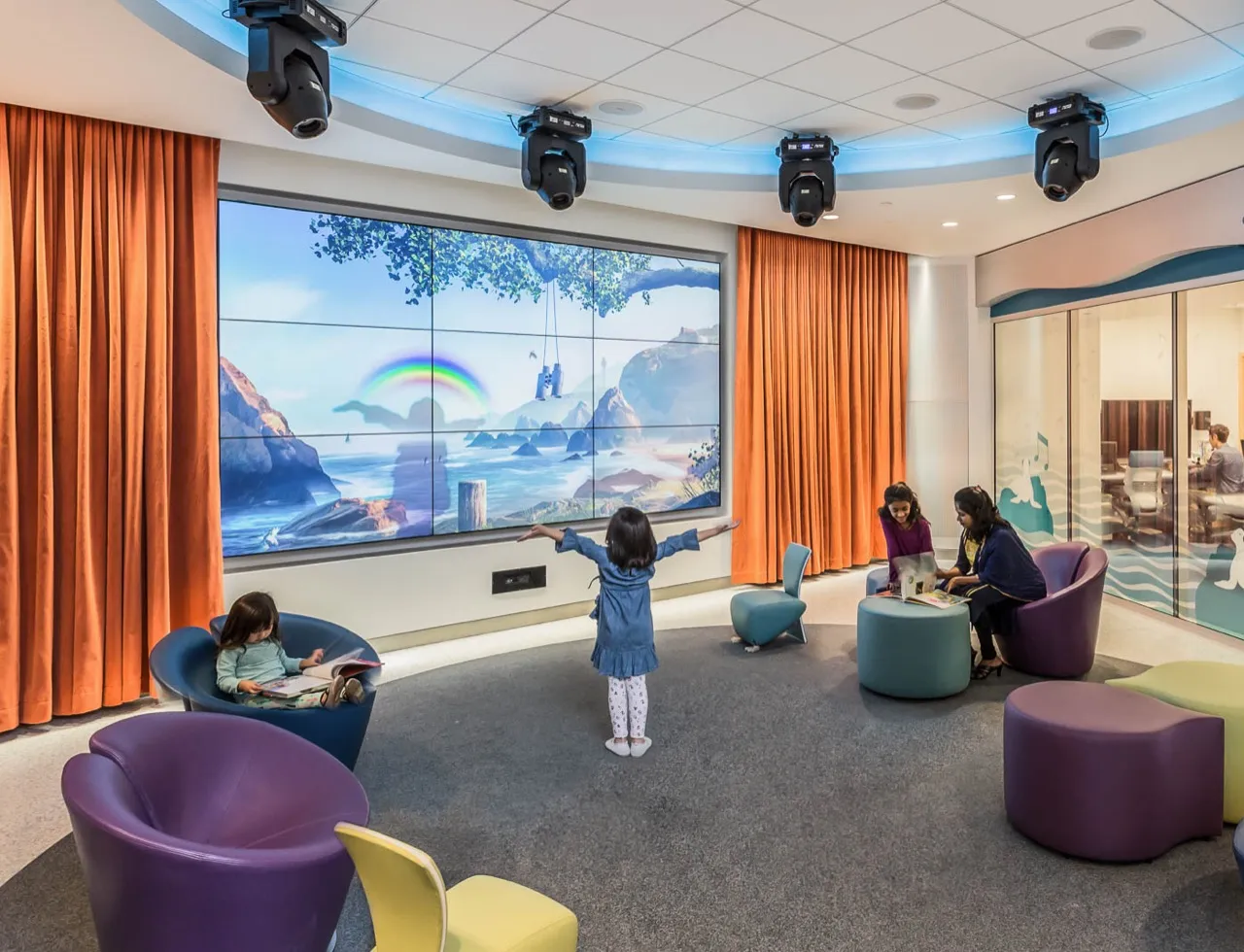
Real-world implementations of this technology are rapidly advancing across modern healthcare facilities. At Stanford Children’s Hospital, the “Interactive California Coast Wellness Eco-Zone” utilizes Ouva’s interactive, gesture-responsive screens that allow children to learn about ecosystems and engage in therapeutic play simply by moving their bodies in front of the display. Similarly, Kaiser Permanente Roseville Medical Center leverages the AI-powered Ouva patient observation system and the Ouva Sensory Experience to deliver calming educational content, while simultaneously providing healthcare teams with real-time engagement metrics for data-driven improvements in care delivery. Furthermore, enterprise health systems are augmenting the hospital room via robust ambient integrations, deploying an expanded range of ambient AI-powered capabilities to improve patient safety, flow, and mobility monitoring, directly advancing the concept of the “Smart Room of the Future.”
The interaction with these ambient displays occurs in graduated, user-controlled phases:
- Ambient Display Phase: The system remains in a neutral, visually unobtrusive state when no direct interaction is detected, minimizing cognitive overload.
- Implicit Interaction Phase: As the patient or caregiver physically shifts their attention toward the display, the ambient system detects the movement and responds by subtly highlighting relevant information, such as upcoming medication schedules.
- Subtle Interaction Phase: By lingering on the display or providing specific non-verbal cues (e.g., sustained eye contact), the user commands the system to deliver deeper educational content, launching interactive, 3D animated videos or connecting to a conversational AI agent for immediate Q&A.
Furthermore, ambient listening technologies can automatically transcribe and summarize clinical encounters in real-time. Following the encounter, the ambient system instantly translates highly technical clinical summaries into layperson-friendly educational modules available on the patient’s in-room interactive display.
Value-Sensitive Design in AmI Implementation
The deployment of pervasive surveillance technology in vulnerable clinical settings raises significant concerns regarding patient privacy and autonomy. To mitigate this, technology providers employ a stepwise Value-Sensitive Design (VSD) methodology (refer to Designing Effective Sensory Rooms for core implementation principles). For example, researchers at Radboudumc successfully engineered an ambient intelligence solution for remotely and continuously monitoring patients recovering from major abdominal surgery by strictly adhering to this VSD approach. This framework ensures that the fundamental human values of safety, privacy, and inclusiveness are hardcoded into the engineering process. This includes testing in mock-up environments and gathering empirical feedback from diverse actors before authentic hospital room deployment, guaranteeing that the technology functions as a supportive digital umbrella.
Part 4: Clinical Simulation and the Role of AI in Provider-Patient Communication Training
The successful implementation of interactive patient education relies heavily on the communicative competence of the human healthcare providers managing the systems. Consequently, AI is driving a parallel revolution in medical education and clinical simulation, training the next generation of providers to communicate effectively, manage complex interactive technologies, and deliver empathetic care. By utilizing augmented reality and virtual simulations, medical professionals are granted a safe, immersive environment for hands-on training, complete with instant grading and feedback mechanisms that refine their clinical approaches.
AI-Driven Simulation Technologies
Institutions are pioneering the use of artificial intelligence to redefine patient-provider interactions during the training phase. Key technologies deployed in advanced simulation centers include:
- AIMHEI (AI in Medical Healthcare Education Interface): Analyzes line-by-line transcripts of student-patient interactions, scoring communicative performance and delivering rich coaching feedback.
- Medical Case Creator (MCC): Rapidly compiles highly realistic simulation case templates, ensuring students face a diverse array of patient education scenarios.
- 2D and 3D Virtual Patients: Students interact with highly immersive, speech-enabled virtual avatars that respond dynamically to the student’s tone, medical language, and clinical reasoning, serving as a safe sandbox to practice delivering complex educational information.
- Motivational Interviewing Tool (MITI 4.2): Assesses the provider’s capacity for empathy, collaborative communication, and the generation of “change talk” — skills absolutely critical for encouraging patient adherence to educational protocols.
By training in an environment where AI provides instant, unbiased feedback on non-technical skills like professionalism and empathy, future clinicians are far better equipped to integrate these interpersonal skills into their practice.
Part 5: Ethical, Regulatory, and Privacy Considerations in AI Healthcare Deployments
The aggressive deployment of emotion-aware algorithms and pervasive ambient sensors across the patient journey introduces a spectrum of severe ethical, regulatory, and operational risks. Healthcare is a domain defined by an absolute zero-tolerance for error; thus, the systems governing patient education must be architected with rigorous safeguards.
Mitigating Hallucinations and Data Bias
The most prominent risk of utilizing LLMs for patient education is “hallucinations” — instances where the AI generates highly confident, structurally plausible, but entirely fictitious and medically dangerous information. A patient acting upon hallucinated medication dosage instructions could suffer catastrophic health consequences.
To neutralize this profound threat, all generative patient education content must be subjected to a stringent Human-in-the-Loop (HITL) governance structure. Certified clinicians must meticulously review, edit, and validate every educational module before it is exposed to the patient. Furthermore, foundational models must be aggressively monitored for embedded data bias to prevent culturally inappropriate or biologically inaccurate recommendations for minority populations.
Strict HIPAA Compliance and Data Security
The transition to highly personalized, AI-driven educational paths and continuous ambient monitoring necessitates the ingestion and processing of vast quantities of hyper-sensitive patient data. Any conversational chatbots or ambient intelligence platforms interacting with Protected Health Information (PHI) must be fully, demonstrably compliant with the Health Insurance Portability and Accountability Act (HIPAA). Organizations must utilize enterprise-grade, locally hosted, or strictly siloed AI environments to ensure that sensitive patient inquiries are never utilized to train public, open-source LLMs. All patient data utilized for predictive modeling or personalized educational paths must undergo robust anonymization and cryptographic encryption protocols prior to processing.
Preserving Human Autonomy and Managing Alert Fatigue
While emotion-aware AI can highly effectively simulate empathy and provide foundational cognitive behavioral support, it remains inherently incapable of genuine, lived human connection. AI must be strictly positioned as a powerful augmentation tool rather than a wholesale replacement for clinical staff. Virtual Health Assistants must be programmed to automatically and seamlessly escalate the interaction to a human nurse or physician the moment a patient exhibits signs of severe emotional distress or complex clinical deterioration.
Similarly, clinical staff must be protected from “alert fatigue.” Providers stress the critical importance of ensuring that ambient systems and AI monitoring devices generate a limited, highly curated number of clear, clinically actionable alerts. Proper patient and provider education regarding how to interpret and respond to these AI-generated alerts is paramount to ensuring the safe and effective use of the technology.
Conclusion
The integration of interactive AI learning environments and ambient intelligence represents a watershed moment in the evolution of healthcare communication and hospital care delivery. True clinical transformation occurs when the patient is immersed in a seamless, interactive, and emotionally intelligent educational ecosystem. By leveraging conversational Virtual Health Assistants, dynamic visual aids, and gamified recovery protocols, providers can systematically dismantle the historical barriers of low health literacy and treatment non-adherence.

The application of neuro-symbolic, emotion-aware AI ensures that complex medical education is delivered with simulated empathy and rigorous cognitive behavioral support, directly addressing the profound psychological dimensions of chronic illness and surgical recovery. Furthermore, extending this digital journey into the physical hospital room via Ambient Intelligence creates a holistic, ubiquitous network of continuous care. Intelligent hospital rooms that silently monitor for fall risks while simultaneously offering context-aware, interactive educational displays redefine the fundamental concept of patient safety and engagement.
To realize the maximum clinical potential of these technologies, healthcare organizations must successfully navigate an incredibly complex ethical landscape. This requires enforcing strict human-in-the-loop oversight to eliminate AI hallucinations, ensuring absolute HIPAA compliance in data handling, mitigating algorithmic bias, and fiercely maintaining the irreplaceable value of human empathy. By strategically balancing technological innovation with uncompromising clinical governance, healthcare providers can deliver a comprehensive patient education experience that fundamentally improves clinical outcomes, operational efficiency, and the overarching human experience of care.
Learn more at: Ouva Solutions for Hospitals and Clinics
Frequently Asked Questions
How does AI improve patient education in hospitals?
AI improves patient education by personalizing content, adapting the difficulty of medical information based on an individual patient's comprehension level, and delivering it through highly engaging formats like Virtual Health Assistants, animated procedural videos, and gamified quizzes.
What is an intelligent hospital room?
An intelligent hospital room uses Ambient Intelligence (AmI) — such as unobtrusive sensors, computer vision, and ambient listening — to continuously monitor patient safety, prevent adverse events like falls, enforce hygiene protocols, and deliver contextual patient education via smart displays without requiring manual input.
How do interactive ambient displays support pediatric patients?
Ambient displays are gesture-responsive screens that allow pediatric patients to engage in educational activities and therapeutic play by simply moving their bodies. For example, learning about local ecosystems interactively helps reduce anxiety, build emotional resilience, and create a calming healing environment.
Can AI assist nurses with patient monitoring and engagement?
Yes. AI-powered care automation and patient observation systems can continuously analyze patient movement and physiological biomarkers to predict potential adverse events. By actively guiding nurse attention to the patients who need immediate assistance, these systems drastically reduce the cognitive burden and alert fatigue often experienced by clinical staff.