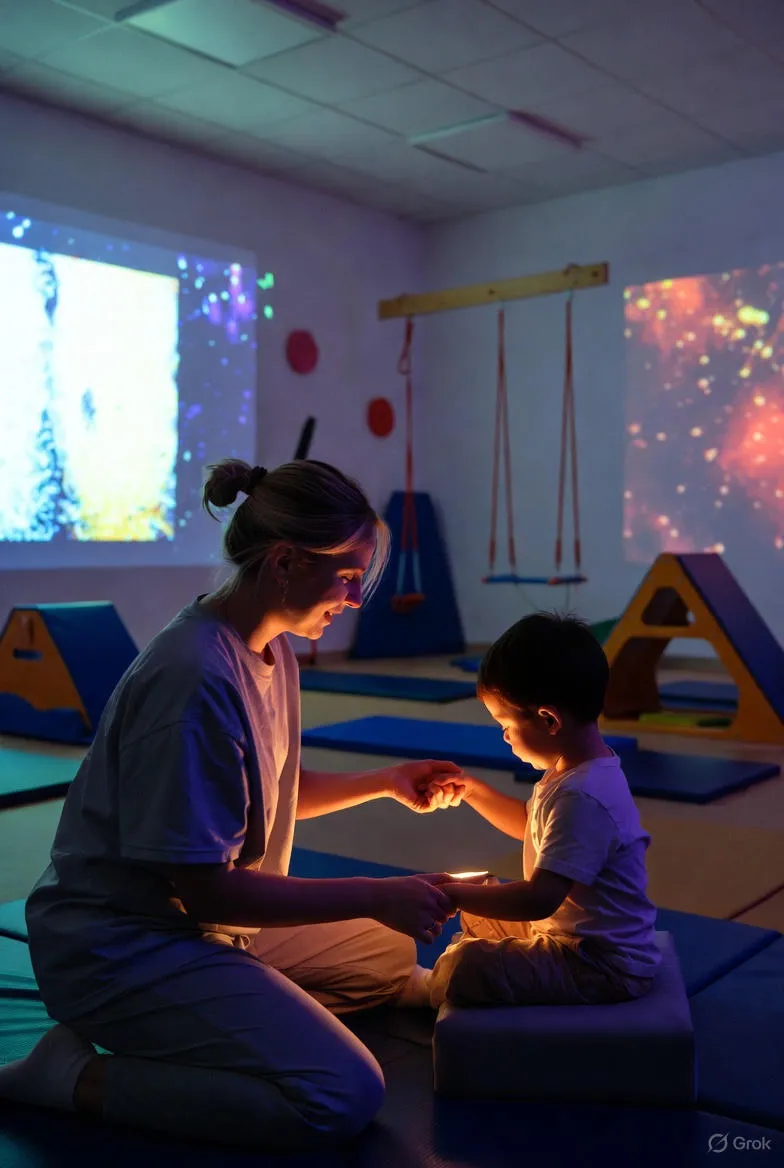
Guide
Top Sensory Room Products in 2026: A Buyer's Guide to Equipment, Pricing, and AI-Powered Innovation
The sensory room of 2026 looks nothing like the sensory room of a decade ago. What was once a reactive, closet-sized space for withdrawal has become a proactive part of clinical and educational infrastructure — engineered to support emotional regulation, cognitive development, and nervous-system resilience before a crisis ever starts.
This guide walks through the sensory room products actually shaping these spaces this year: what each one does, what it costs, where the evidence stands, and which setting it fits best — hospitals, schools, ABA clinics, or home. One principle runs underneath all of them, and it’s worth stating up front: outcomes tend to improve when the user — not the equipment — controls the experience.
Key Takeaways
- The defining shift in 2026 is user control. In a small 2022 study of 41 autistic children, participants showed more attention and fewer repetitive behaviors when they could control the sensory changes themselves — a finding consistent with a 2025 systematic review of multisensory environments, though both stress that the overall evidence base is still thin. That principle now drives product design across the category — from AI-powered walls down to $250 light tubes.
- Demand for credentialed behavioral health staff is outpacing supply. In the US, BCBA job postings rose 28% year over year in 2025 to more than 132,000 openings, while active credential holders numbered roughly 83,500 — a gap that is pushing clinics toward tools that extend clinician capacity rather than replace it.
- Hygiene has replaced novelty as the top purchasing filter for institutional buyers. Waterless LED tubes, touchless floor projection, and wipe-clean weighted goods are displacing water-filled and shared-touch equipment in hospitals and schools.
- Price ranges are wide, and the entry point is lower than many buyers expect. A tabletop LED tube starts around $250, and subscription-based AI-powered interactive walls (such as Ouva’s) start around $195/month with screen options under $10,000 — larger multi-station or multi-story builds scale up from there. Most facilities build a room in tiers rather than buying everything at once.
- Evidence quality varies by category. Deep pressure and vestibular input have the deepest occupational-therapy literature behind them; AI companion-character features are newer and should be evaluated on data privacy and clinical fit, not novelty.
Why Sensory Rooms Changed in 2026

Sensory spaces are increasingly described with inclusive, non-clinical language — “rainbow rooms,” “nurture rooms” — reflecting a shift away from deficit-focused terminology and toward spaces built to help any learner regulate, reset, and re-engage.
Two forces are accelerating investment. First, the broader indoor children’s playground equipment market was valued at roughly $7.3 billion in 2026, with steady mid-to-high single-digit annual growth as operators differentiate on therapeutic value rather than novelty alone. Second, the workforce delivering hands-on behavioral care is stretched thin: BCBA job postings climbed 28% in a single year, reaching over 132,000 openings against roughly 83,500 active credential holders nationally. That gap is pushing facilities to invest in equipment and digital tools that make each clinical hour go further, rather than treating sensory equipment as an optional amenity.
For the clinical case behind this shift — including how user-controlled environments change attention and behavior — see our guide to emotional regulation tools for autism and ADHD in 2026.
Get the Room Right First: Acoustics, Light, and Zoning
No product on this list performs well in a poorly built room. Three architectural fundamentals set the ceiling on how effective any equipment can be.
On acoustics, clinical and school environments increasingly target a Sound Transmission Class (STC) rating of 50 or higher between therapy spaces, since hard-walled, converted classrooms can amplify echo instead of absorbing it — which is why sound-absorbing panels made from cork, wood veneer, and wool-blend textiles are now standard in new builds. On lighting, flickering, cool-toned fluorescent lighting is widely discouraged for autistic and ADHD users because it can raise anxiety and trigger sensory overload; tunable, dimmable LED systems around a warm 3000K are the current baseline, often paired with schedules that shift from bright and focus-enhancing in the morning to warm and relaxing later in the day. And on zoning, rooms are increasingly split into distinct low-arousal (calming) and high-arousal (active/proprioceptive) zones rather than a single multi-purpose layout, so the space can flex with a user’s fluctuating sensory threshold across a day.
For a full walkthrough of layout and zoning strategy, see Designing Effective Sensory Rooms for Digital Therapy and Best Practices for Effective Sensory Rooms in Schools.
Sensory Room Products Comparison at a Glance
| Product category | Sensory system targeted | Typical price range | Best fit |
|---|---|---|---|
| AI-powered interactive sensory wall | Visual, auditory, proprioceptive | Subscription from ~$195/mo; screens under $10K up to custom multi-story walls | Hospitals, lobbies, ABA clinics, schools |
| Interactive floor projector | Vestibular, proprioceptive, visual | Hardware plus recurring content licensing | Special education, pediatric therapy, elder care |
| Waterless bubble tube (LED “Borealis”) | Visual, tactile, auditory | ~$250–$4,000 depending on size | Any setting needing low-maintenance visual calm |
| LED infinity tunnel | Visual, auditory (sound-responsive modes) | ~$2,299–$3,299 | Wall-mounted feature for calm-down corners |
| Folding mirror den | Proprioceptive, visual, enclosure/security | ~$1,280 (US$) | Portable, shared-equipment settings |
| Sensory cocoon (all-in-one) | Visual, tactile, proprioceptive | Mid-four to low-five figures | Facilities with limited floor space |
| Vibroacoustic chair/lounger | Proprioceptive (deep pressure via sound) | ~$3,500+ | Waiting areas, de-escalation rooms, senior care |
| Weighted blankets/lap pads | Proprioceptive | Low cost, OT-guided use | Home, clinic, classroom (supervised) |
| Sensory swings and frames | Vestibular | Wide range; structural mounting adds cost | OT gyms, schools, home therapy rooms |
| Tactile wall panels | Tactile, fine motor, visual | Low hundreds to ~$1,300+ for large panels | Classrooms, waiting rooms, clinics |
| Multi-tub sensory tables | Tactile | Low-to-mid hundreds | Preschools, OT clinics, childcare centers |
Prices reflect commonly listed retail pricing at the time of writing and vary by vendor, configuration, and region; always confirm current pricing with the manufacturer before budgeting.
AI-Powered Interactive Sensory Walls
The single biggest technology shift in 2026 is the move from static equipment to AI-powered, touchless interactive walls. Using built-in cameras, depth sensors, and computer vision, these displays project scenes that respond to a user’s movement without any wearable, stylus, or physical contact.
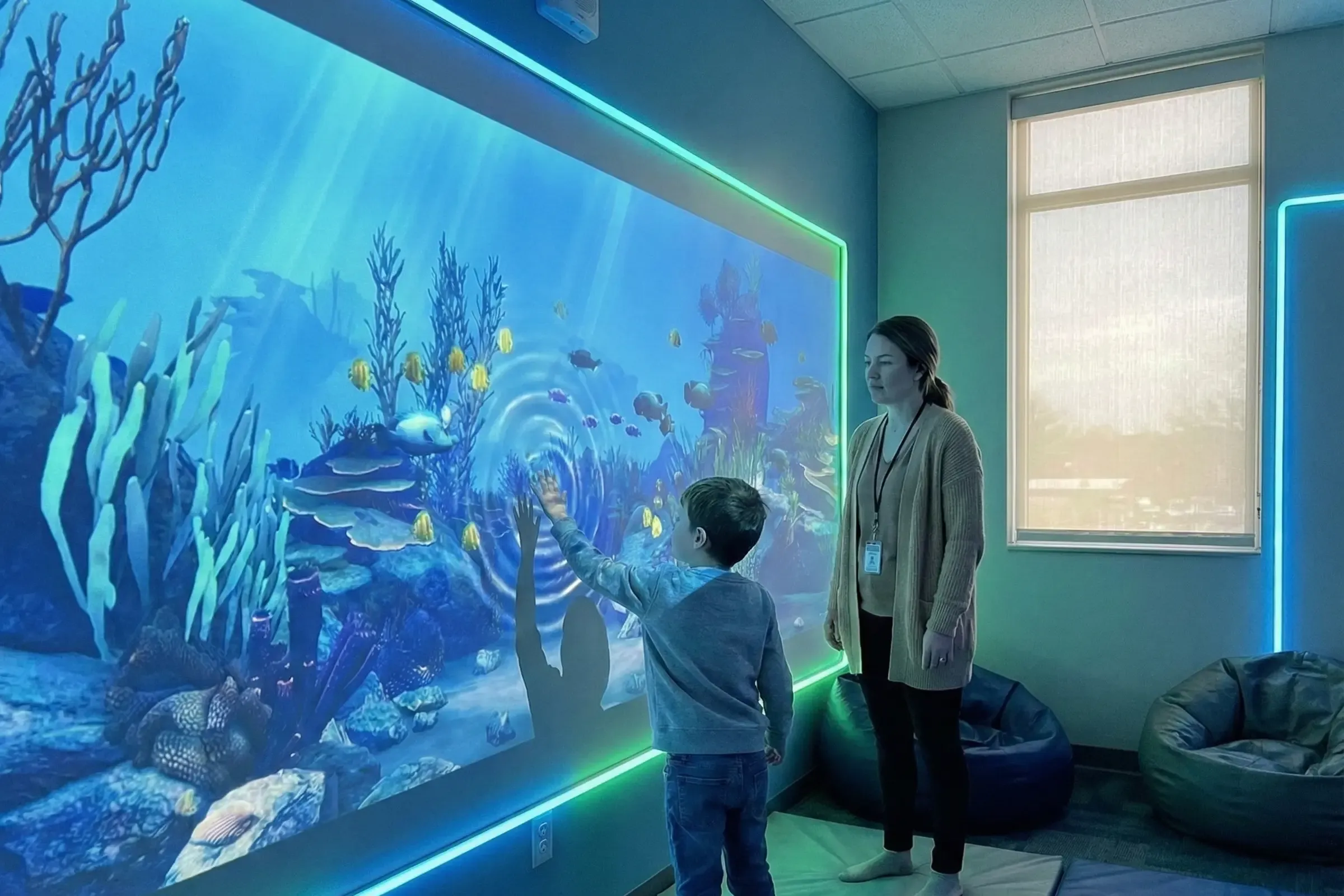
Systems like the Ouva Sensory Experience operate on a continuum from active play to deep calm. For a highly dysregulated user, the wall can shift into a low-arousal mode with slow, biophilic visuals — drifting kelp, gentle ripples, blooming gardens — that let the nervous system settle at its own pace. For a user who is under-responsive or working on joint attention, the same wall can respond to reaches and steps with visual and auditory rewards that encourage motor planning and active participation.
Display hardware varies by facility need.
LED video walls offer bezel-free, daylight-readable brightness suited to hospital lobbies and atriums, with pixel pitches from roughly 1.2mm to 2.5mm that hold up at close range. LCD video walls are a thinner-bezel, more cost-effective option for waiting rooms and classrooms. And interactive projection needs no permanent mounting, casting directly onto existing walls or corners — a common choice for small clinics, calm-down corners, and home use.
A growing feature set in 2026 is the AI “smart companion” — a guided companion character that walks a patient through breathing exercises, procedure explanations, or therapeutic sequences, with tone and content customized by the clinician or facility administrator. At Piedmont’s Bill & Olivia Amos Children’s Hospital, a 17-foot AI-powered interactive wall cycles through biophilic scenes such as “Aquatic Life” and “Four Seasons,” tracks real-time engagement, and uses a smart-messaging companion character to welcome families — turning a sterile lobby into a more restorative space. Similar installations at Kaiser Permanente Roseville, UCSF Benioff Children’s Hospital, and Nemours Children’s Hospital point to consistent gains in patient engagement and communication.
Because these systems respond to a user’s own movement rather than a fixed script, ABA clinics are also using them as flexible reinforcers and as a repeatable way to move a session from escalation back to readiness, while AI analytics can track visual attention, stimulus preference, and response time to feed practice-management data.
Explore what’s involved in deploying these systems: Interactive Sensory Wall for Therapy & Sensory Rooms, Interactive Wall for Hospitals, and the full story of Ouva’s 17ft AI Sensory Wall at Piedmont Children’s Hospital. For the clinical case for AI in autism therapy specifically, read Interactive Sensory Walls for Autism (ASD) & Therapy.
Interactive Floor Projectors
Floor projection turns standard flooring into a responsive, full-body play surface. Short-throw projectors paired with infrared or LiDAR motion sensors detect a user walking, jumping, or moving a wheelchair across the zone and update the projected image in real time, reinforcing motor planning, spatial awareness, and cause-and-effect learning.
These systems are especially popular in special education, pediatric therapy, and elder care because they deliver full-body gross-motor engagement without the infection-control concerns tied to shared touch surfaces or pressure mats.
Budgeting note: total cost of ownership matters more than sticker price. Vendor estimates suggest hardware typically makes up 40–60% of the initial investment, while software licensing and content refreshes can add another 5–15% of the purchase price annually (roughly $500–$2,000 per year). Laser projectors cost 20–30% more upfront than lamp-based units but eliminate frequent bulb replacements — a cost that adds up quickly at hundreds of dollars every 2,000–4,000 hours — reducing both long-term spend and clinical downtime.
Waterless Bubble Tubes (LED “Borealis” Tubes)
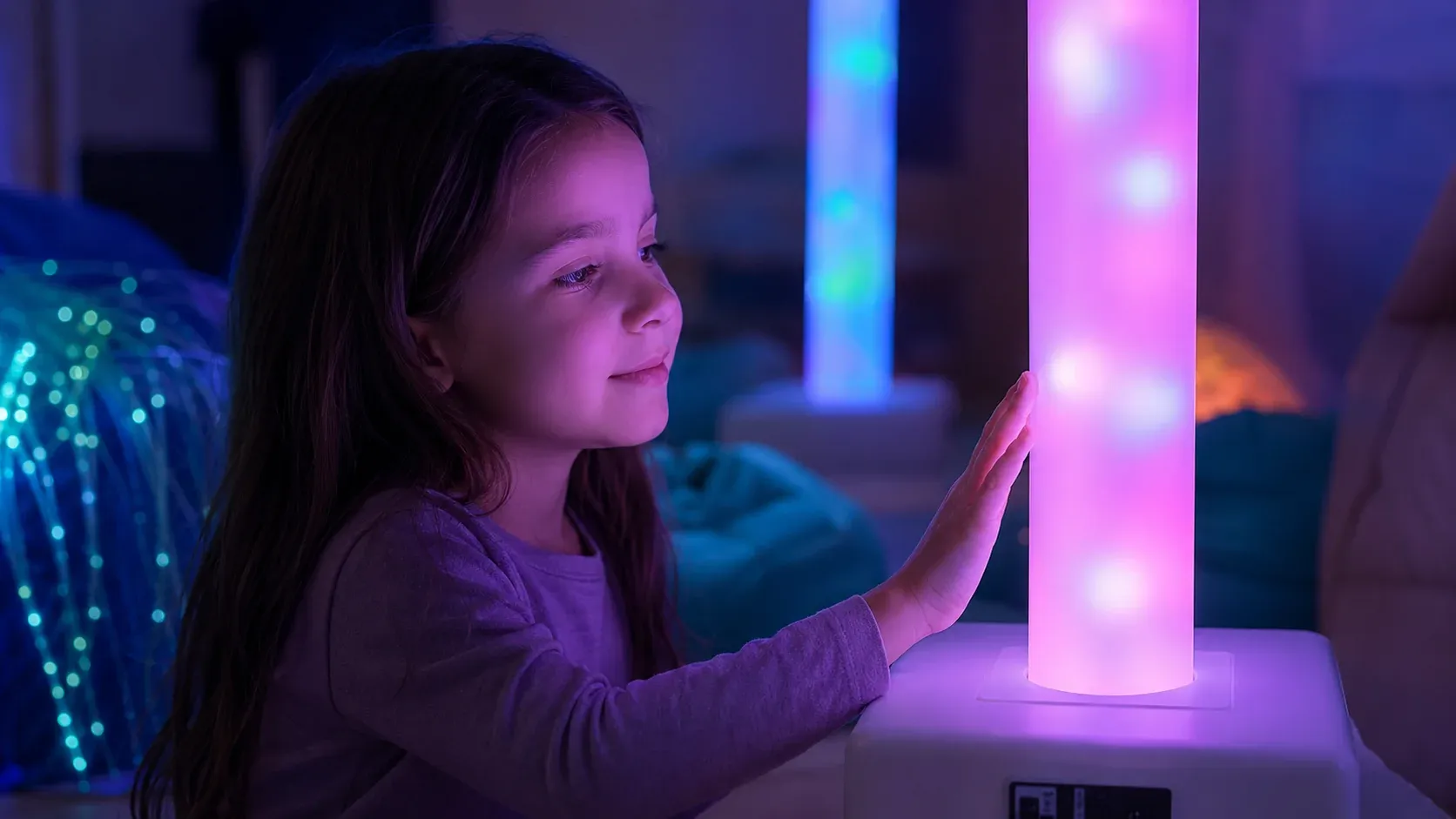
For decades, water-filled acrylic bubble tubes were the anchor of any multisensory room, offering gentle visual tracking, soft vibration, and low auditory humming. But they come with a real maintenance burden: distilled water, regular bacterial-and-algae treatment (commonly a BCB additive), and intensive drain-and-clean protocols that strain under-resourced schools and infection-sensitive hospitals.
2026 has largely crowned the waterless bubble tube — a waterless LED tube also sold as a hurricane or whirlwind tube, and marketed in the UK under the “Borealis” style name — as the institutional standard. Internal fans and customized LED strips simulate the dancing motion of water and bubbles without any liquid, while a wireless multi-way switch preserves the cause-and-effect learning benefit that made the original tubes valuable. Acrylic mirrors mounted behind the tube amplify the visual effect using shatterproof materials for safety. Depending on height and diameter — from tabletop 3.3-foot models up to 6-foot columns — pricing runs from roughly $250 to over $3,500.
Infinity Tunnels and Mirrored Dens
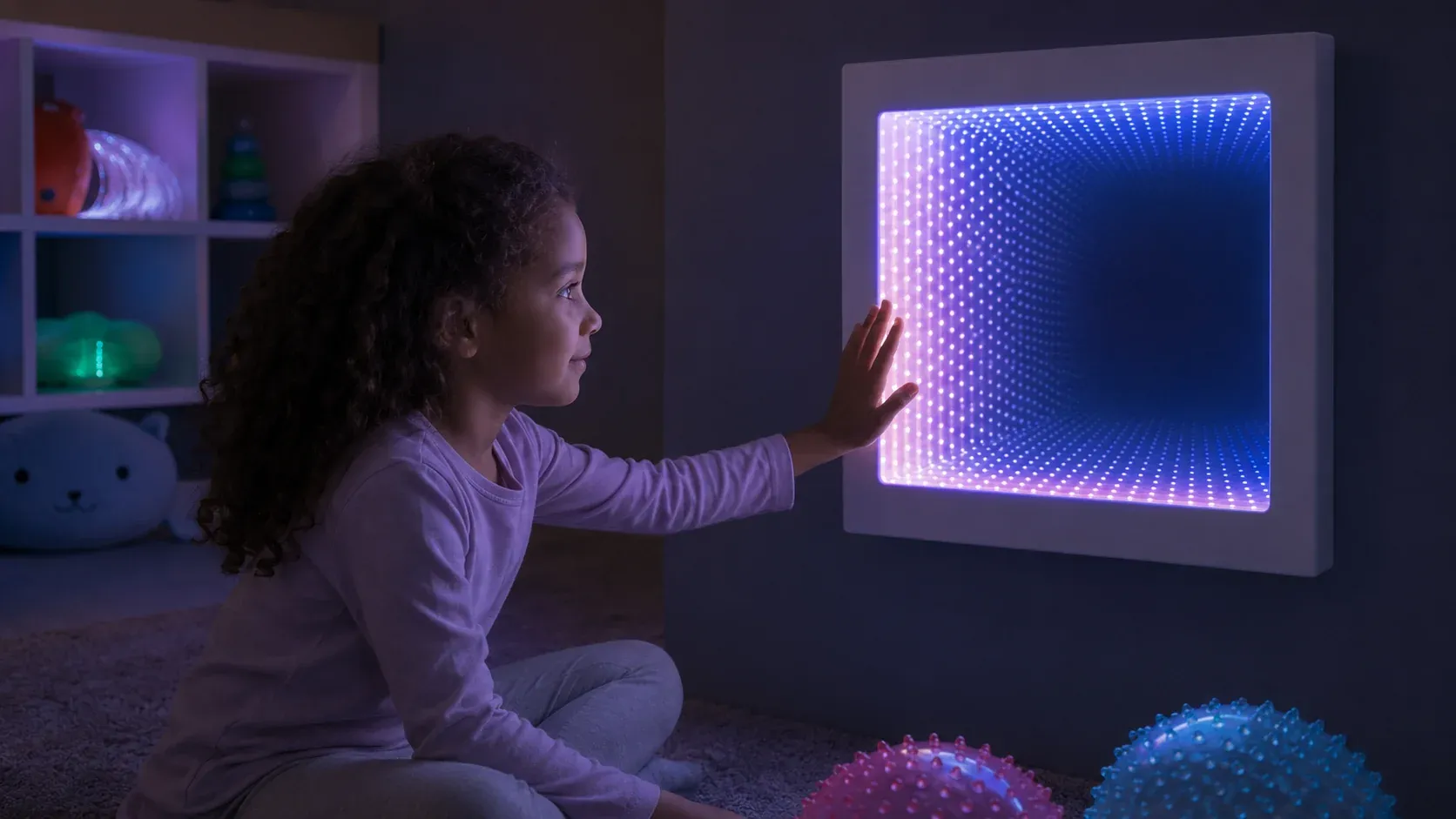
Visual depth is one of the most reliable ways to draw a dysregulated user’s focus away from environmental stressors. The LED infinity tunnel uses parallel mirrors and LED rows to create the illusion of an endless corridor of light, and many models add sound-responsive modes where colors shift in response to a built-in or external microphone — a feedback loop that can encourage vocalization in non-verbal or minimally verbal users. Market pricing across the category’s most common configurations runs roughly $2,299 for a calming (auto-cycling) model, $2,599 for a wireless user-controlled version, and $3,299 for an app-based interactive version — figures confirmed against current manufacturer and authorized-dealer listings.
For users who benefit from physical enclosure, mirrored folding dens such as the TFH Giant Folding Mirror Den offer a portable, fire-retardant foam structure lined with shatter-resistant acrylic mirrors that can configure into a roughly 31.5-inch cube or a triangular tepee, retailing around $1,280 (US$; roughly $1,750 CAD on Canadian listings). The internal reflections multiply light and movement while blocking peripheral classroom chaos, and the structure folds flat for storage — useful for facilities sharing equipment across rooms.
All-in-One Sensory Cocoons
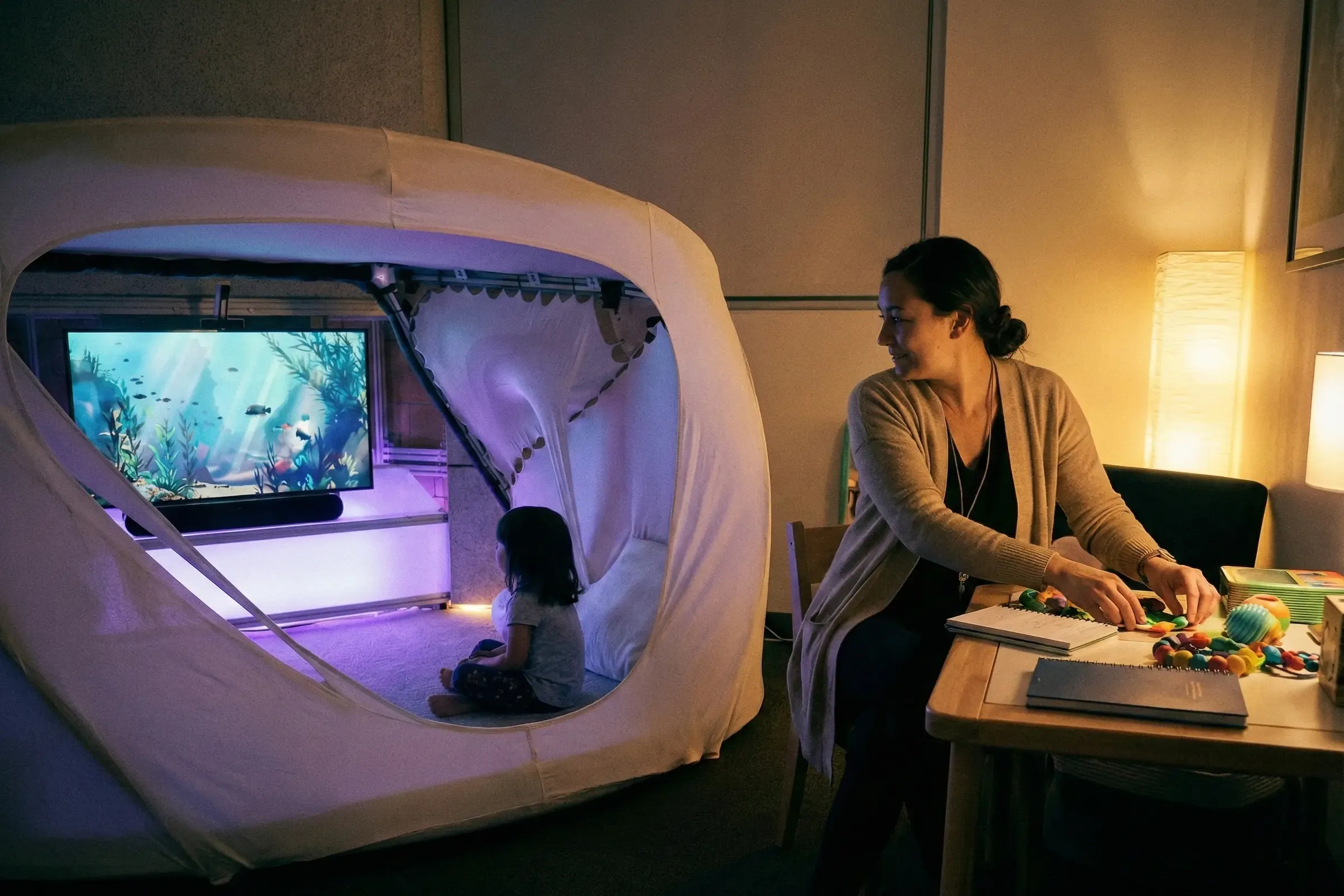
For facilities that can’t dedicate a full room, modular micro-environments like the Experia Sensory Cocoon compress most core equipment into a single corner: a curved padded seating platform, a central LED (or waterless) tube, and a cascading fiber-optic “shower” that visually separates the user from the rest of the room. Mirrors mounted in the corner and overhead multiply the effect of the tube and fiber optics, creating an impression of infinite space extending past the room’s actual boundaries.
Proprioceptive and Vibroacoustic Furniture
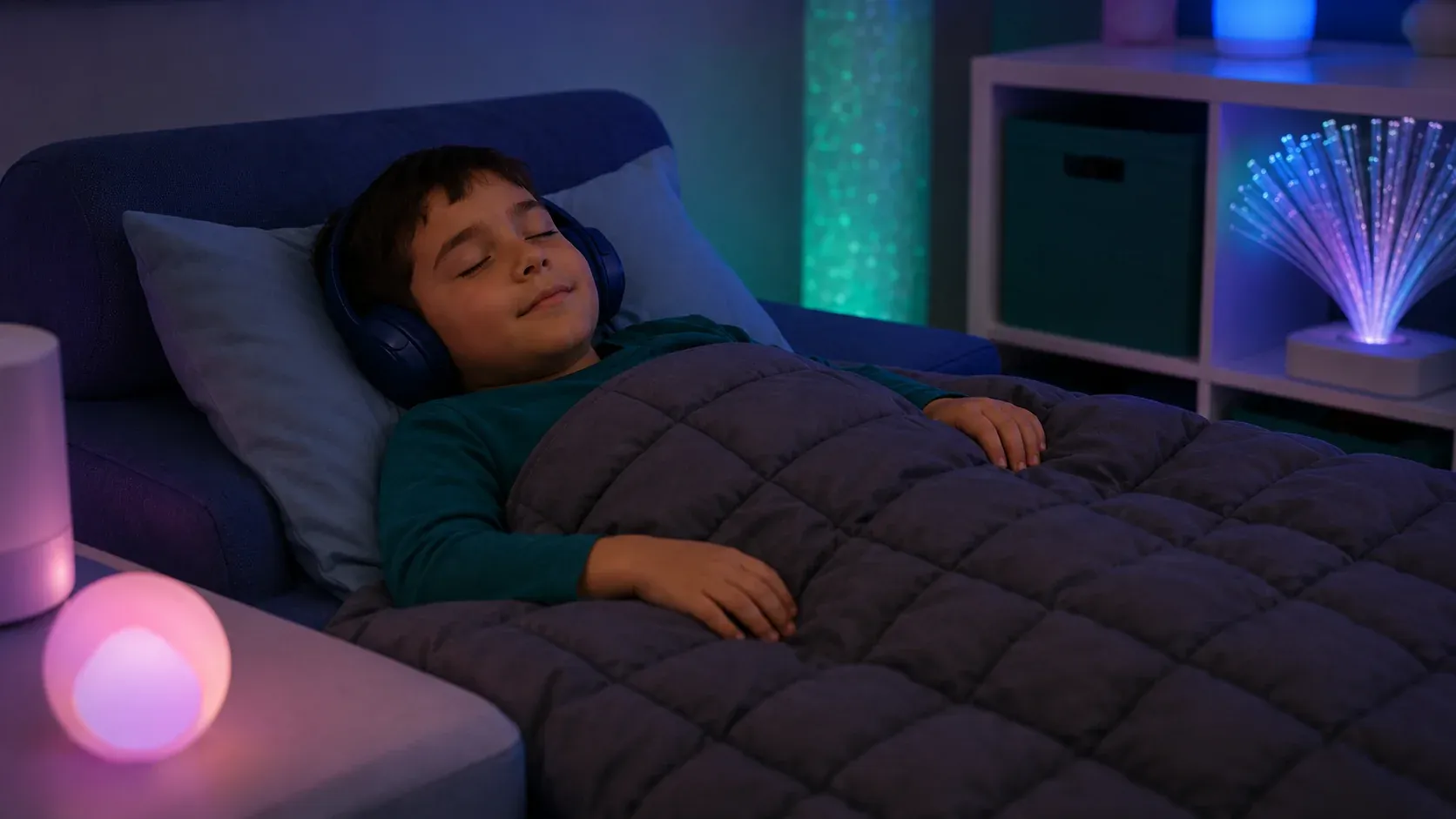
Occupational therapists widely consider proprioceptive input — deep pressure and joint compression — the most universally organizing and calming sensory input available, since it signals to the brain that the body is secure and can lower physiological arousal.
Vibroacoustic chairs and loungers embed low-frequency transducers so users can feel music and sound waves in their muscles and joints without expending physical energy, making them a fit for waiting areas, de-escalation rooms, and senior care; branded therapeutic loungers commonly start around $3,500, with simpler vibrating chairs available for less. Weighted blankets, lap pads, and shoulder wraps remain ubiquitous but have shifted toward discreet, wipe-clean materials for infection control — weight should be curated by an occupational therapist, generally not exceeding about 10% of the user’s body weight, and used as a supervised therapeutic tool rather than casual furniture. Crash mats and body socks provide active proprioceptive input: foam-filled mats let sensory-seeking users jump and land safely with heavy joint compression, while stretchy Lycra body socks offer continuous full-body resistance as the user pushes against the fabric.
Vestibular Equipment: Swings and Movement Tools
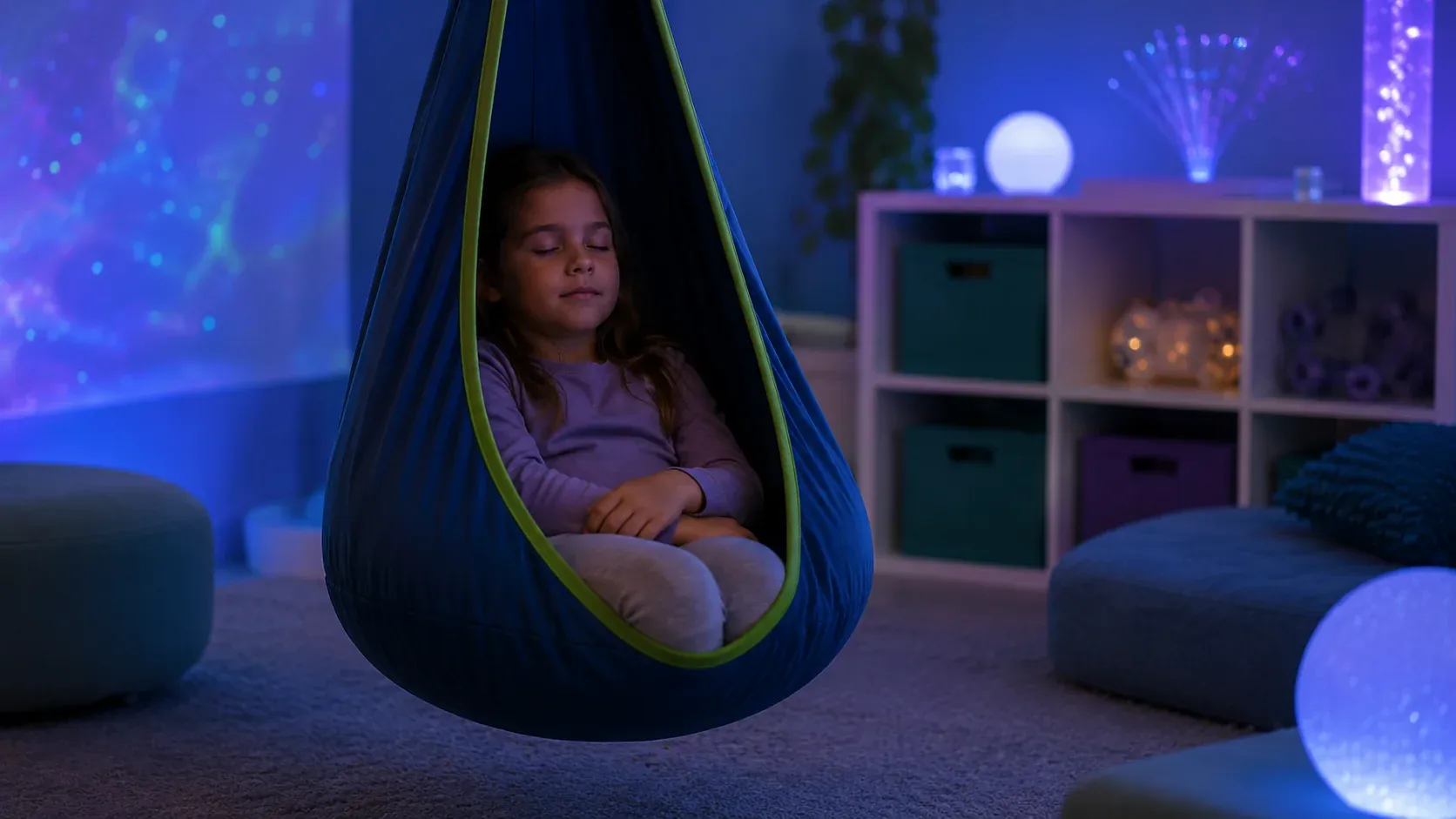
The vestibular system governs balance, spatial orientation, and muscle tone, and school-age children in particular need frequent movement breaks to keep it regulated.
Sensory swings — platform, pod, and bolster styles — are core OT tools, and the type of motion matters: linear (back-and-forth) swinging is calming, while rotary (spinning) swinging is alerting and can help wake up a sluggish sensory system. Ceiling mounts must be engineered for dynamic therapeutic loads by a professional; mounting to drop ceilings is a well-documented safety hazard, and free-standing swing frames are the practical workaround where structural ceiling work isn’t possible.
For floor-based vestibular input, wobble boards, mini-trampolines, sit-and-spins, and scooter boards give users who can’t sit still for long periods essential movement, while simultaneously building core strength and motor planning.
Tactile Panels and Sensory Tables
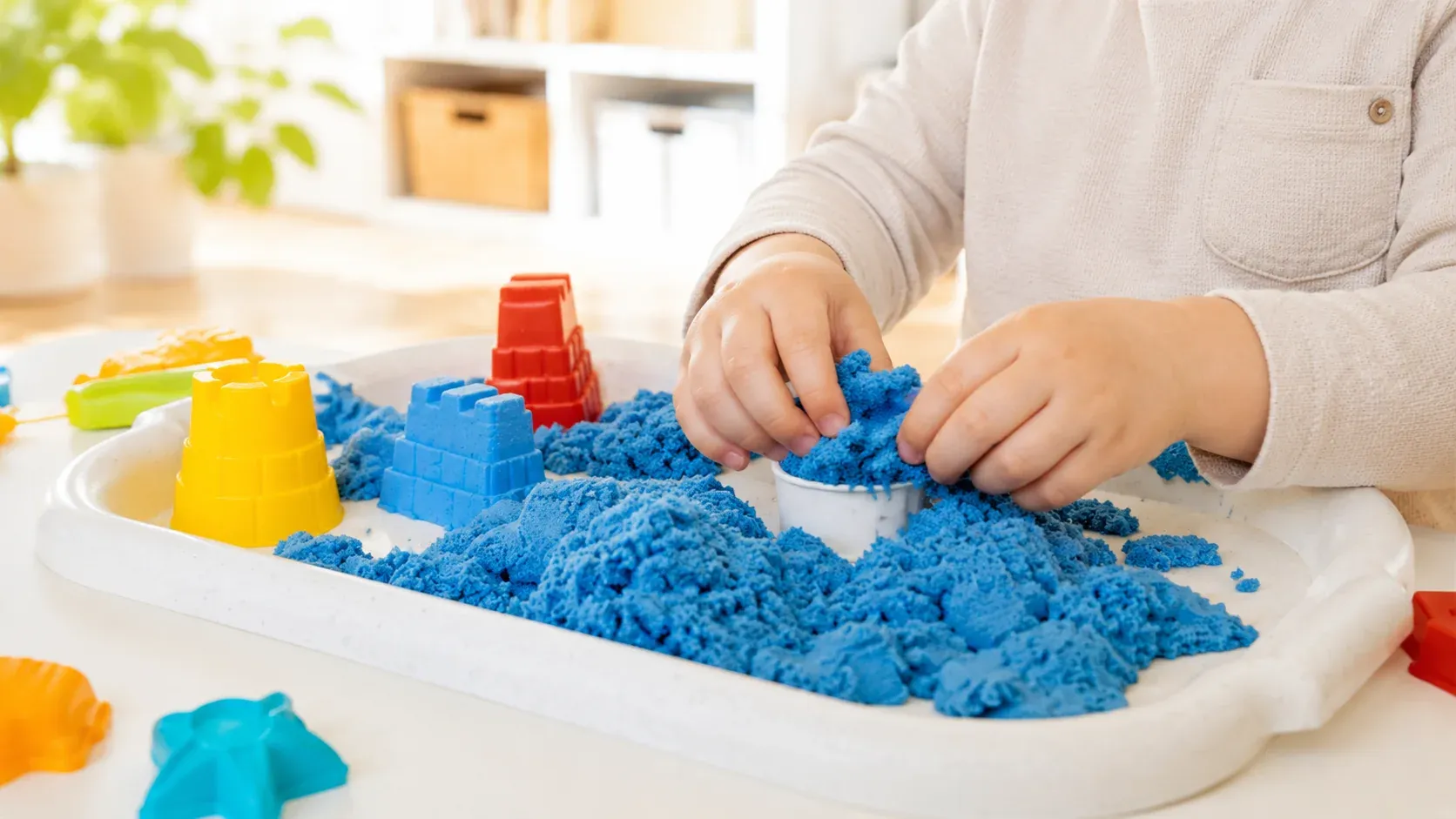
Tactile tools address two opposite needs: tactile defensiveness (avoiding certain textures) and tactile-seeking behavior (craving intense textural input).
Sensory wall panels — modular wood or plastic boards with gears, locks, latches, textured fabrics, and illuminated pegboards — consolidate fine-motor practice into a wall-mounted format that keeps loose parts from cluttering the room. Large panels like the Razzle-Dazzle marble LED wall, featuring roughly 2,000 colored marbles and built-in lighting, retail around $1,328.
For messy, multi-material exploration, multi-tub sensory tables — such as the Jonti-Craft 3 Tub Sensory Table — allow water, kinetic sand, rice, or therapy putty to be explored side by side without cross-contamination. Tables come in tailored heights for toddlers (about 20 inches) and preschoolers (about 24 inches) and are commonly GREENGUARD Gold Certified, meeting the indoor air-quality bar required for procurement in accredited childcare centers and hospitals.
How to Choose by Setting
Pediatric Hospitals and Clinics
Sensory design here is woven into the patient journey to reduce trauma and anticipatory anxiety. Interactive video walls handle pre-op and waiting-area distraction, while touchless bedside screens support point-of-care distraction during IV insertions, blood draws, or imaging — often reducing the need for chemical sedation or physical restraint. See our Hospitals & Clinics solutions overview and Case Studies for real deployments.

Schools and Special Education
Sensory spaces used proactively — before a behavioral incident, not just after — are linked to meaningfully fewer behavioral referrals in schools that adopt them, helping students return to a regulated, cognitively available state. Specialized programs like Sensory Motor Arousal Regulation Treatment (SMART) rooms use balance beams, fitness balls, weighted items, and swings to help children process complex trauma through embodied, full-body movement rather than talk therapy alone. Full guidance: Best Practices for Effective Sensory Rooms in Schools.

ABA Therapy Clinics
Interactive walls double as positive reinforcers and as a low-friction way to practice joint attention, imitation, and parallel play, while AI analytics can feed longitudinal data straight into practice-management platforms — a meaningful efficiency gain given rising BCBA caseloads. See Top Autism & ABA Therapy Apps and Digital Tools in 2026 for the software side of this same shift.

Home
Prioritize low-cost, high-evidence categories first: a weighted lap pad, a compact folding mirror den, and a portable projection unit typically deliver more day-to-day value than a single large installation. For layout ideas, see Designing Effective Sensory Rooms for Digital Therapy.
Conclusion: Equipment Is the Delivery System, Not the Outcome
None of the equipment in this guide works in isolation. The available research — most directly a small 2022 study of 41 autistic children, alongside a broader 2025 systematic review — points toward one underlying principle: outcomes tend to improve when the user controls the experience, not just when the room is well-stocked. The evidence base is still thin and the samples small, so treat this as a design compass rather than a settled result — but the direction is consistent enough to build around. A $250 waterless tube used with intention and choice can outperform the most sophisticated interactive wall used passively.
The practical path for 2026 is the same whether you’re outfitting a single home corner or a hospital wing: get the acoustics and lighting right first, choose equipment that matches the specific sensory system you’re trying to support, favor low-maintenance and touchless options in shared or infection-sensitive spaces, and put user agency at the center of the design. For continuing, evidence-based guidance on where this space is headed, browse the Ouva Blog.
Related Reading
Designing Effective Sensory Rooms for Digital Therapy
Explore the evolution of sensory rooms for neurodivergent students. Learn how to design effective spaces using interactive screens and sensory displays.

Best Practices for Effective Sensory Rooms in Schools
Read our best practices for designing effective sensory rooms in schools. Empower neurodiverse students with interactive environments and sensory displays.
Interactive Sensory Walls for Autism (ASD) & Therapy
Discover how AI-powered interactive sensory walls are transforming autism therapy by providing personalized, engaging, and adaptive sensory experiences.
Frequently Asked Questions
What is the most important sensory room product to buy first?
There's no single universal answer — it depends on which sensory system needs the most support. But most OT-informed starter rooms begin with one calming visual anchor (a waterless LED tube or infinity tunnel), one proprioceptive tool (a weighted lap pad or crash mat, used under OT guidance), and a way to give the user control over the experience, since — in a small 2022 study of 41 autistic children — control over sensory change was linked to better attention and fewer repetitive behaviors.
Are water-filled bubble tubes obsolete in 2026?
Not obsolete, but increasingly replaced in institutional settings. Water-filled tubes still offer authentic vibration and sound, but the maintenance burden — distilled water, additive treatment, and drainage — is a real barrier for hospitals and schools with strict infection-control standards, which is why waterless bubble tubes (waterless LED tubes, sometimes sold under the "Borealis" name) have become the institutional default.
How much does an AI-powered interactive sensory wall cost?
It's more accessible than many buyers assume. Subscription-based systems like Ouva's start around $195/month, with screen options under $10,000 — a long way from the six-figure budgets often associated with "video walls." Cost scales from there with hardware (interactive projection versus LED or LCD video wall), screen size, and content package, up to large multi-station or multi-story hospital installations. Facilities should request a scoped quote based on room dimensions, use case, and whether AI companion or analytics features are needed.
Is it safe to mount a sensory swing from a drop ceiling?
No. Ceiling mounts for therapeutic swings must be engineered for dynamic loads and evaluated by a structural professional; mounting to a drop ceiling is a well-documented safety hazard. Free-standing swing frames are the standard workaround where structural changes aren't possible.
Do interactive sensory walls actually improve behavioral outcomes?
The strongest signal is about control, not the technology itself: in a small 2022 study of 41 autistic children, those who could control sensory changes in a multisensory environment showed more attention and fewer repetitive behaviors. It's a single small study, so hold it loosely — but interactive walls extend that same control-based design to a larger, more responsive scale, and early hospital and clinic deployments report gains in engagement and reduced anxiety, but facilities should define and track outcomes — engagement time, transition success, caregiver feedback — rather than assume results.